







Database performance isn't a compute problem. It's an architecture one.
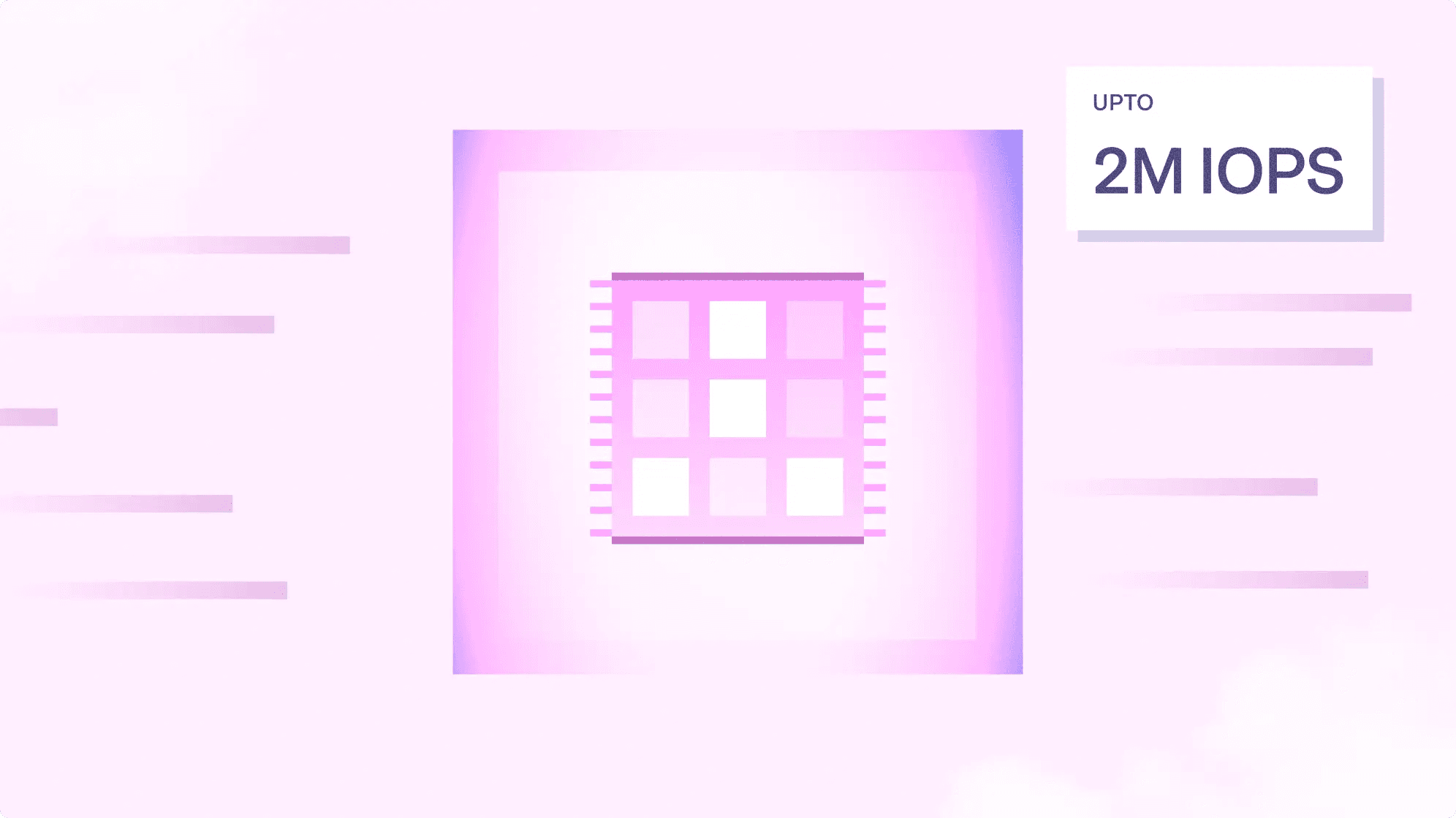
Most cloud databases scale IO by scaling compute. Tessell decouples storage performance from compute with an NVMe-backed infrastructure to provide up to 2 million IOPS per database, sized for your workload, not your IO ceiling.
10x
performance improvement
Up to 2 million IOPS
on a single database, NVMe-backed configurations
Up to 65%
lower cost
Every IO problem on Cloud has the same answer. More compute.
Your workload needs throughput, not CPU. But the only lever the platform gives you is to scale up: a bigger VM, more vCPUs. So you pay for compute you don't need to get the IO that you do. And the cost compounds every time, into a bigger bill you never chose.
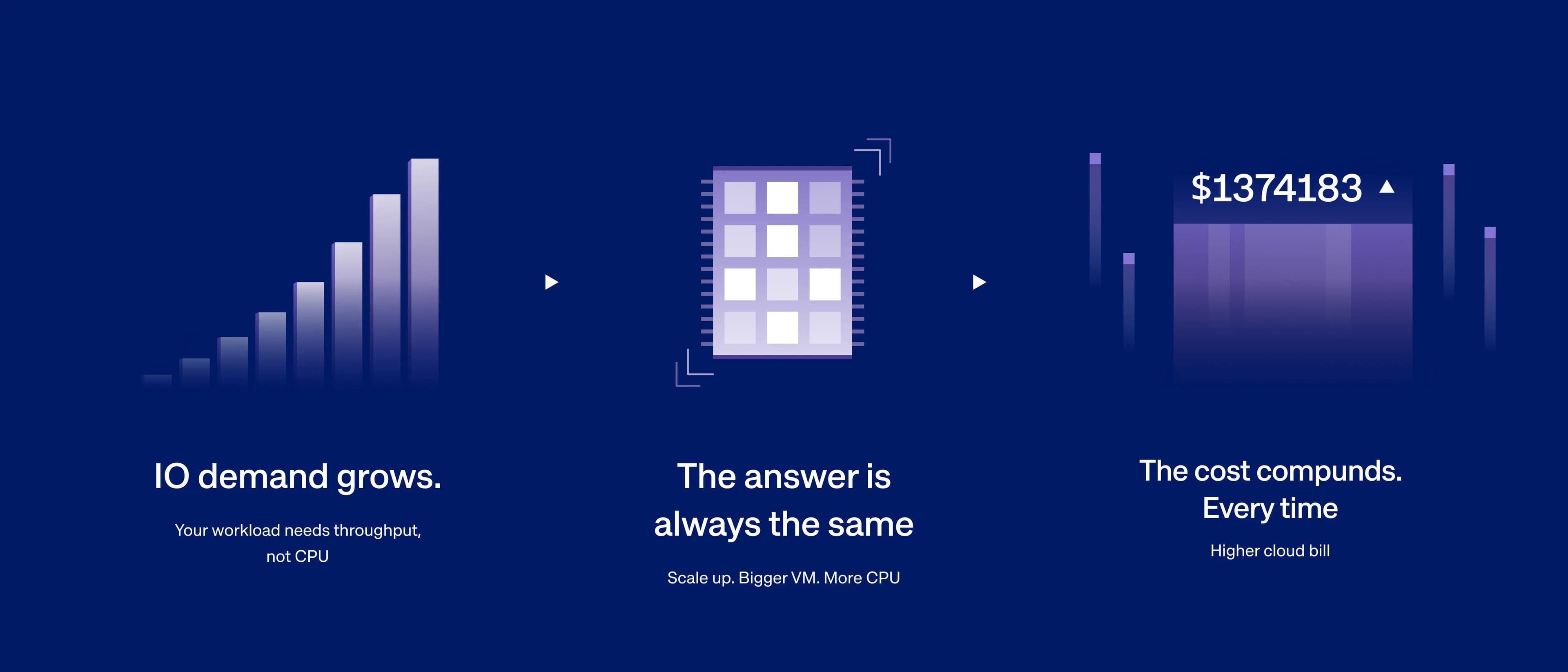
But Tessell handles IO and compute separately
Three architectural decisions that change how your database estate performs, costs, and scales: more performance without more compute, more databases without more servers, more storage without more re-architecture.
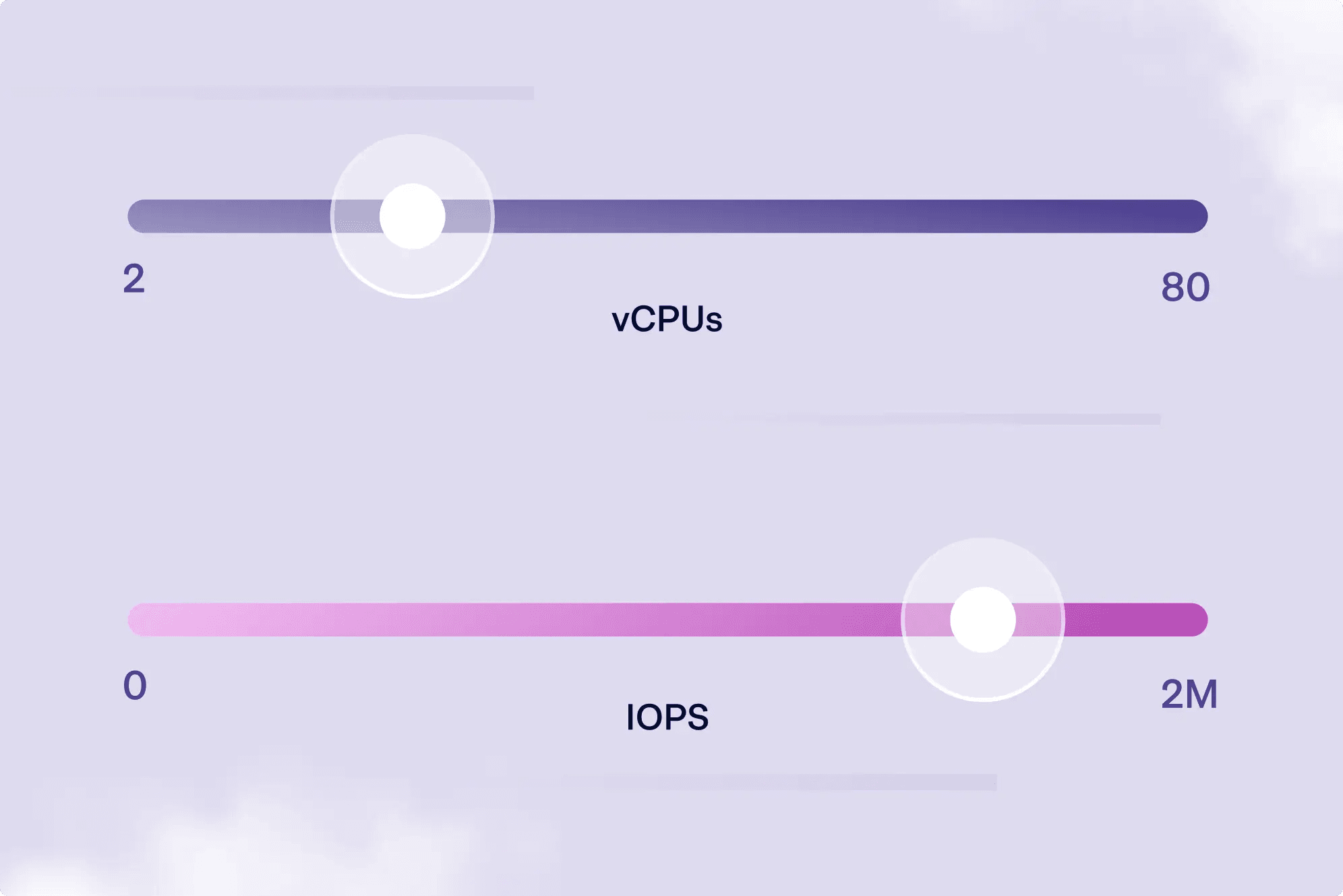
NVMe-backed infrastructure. IOPS without the compute penalty.
Tessell decouples storage performance from compute entirely, so you right-size compute for your application, not your storage throughput. Provisioned on storage-optimized instance families with local NVMe SSDs, no shared-storage bottlenecks, no remote-disk latency.
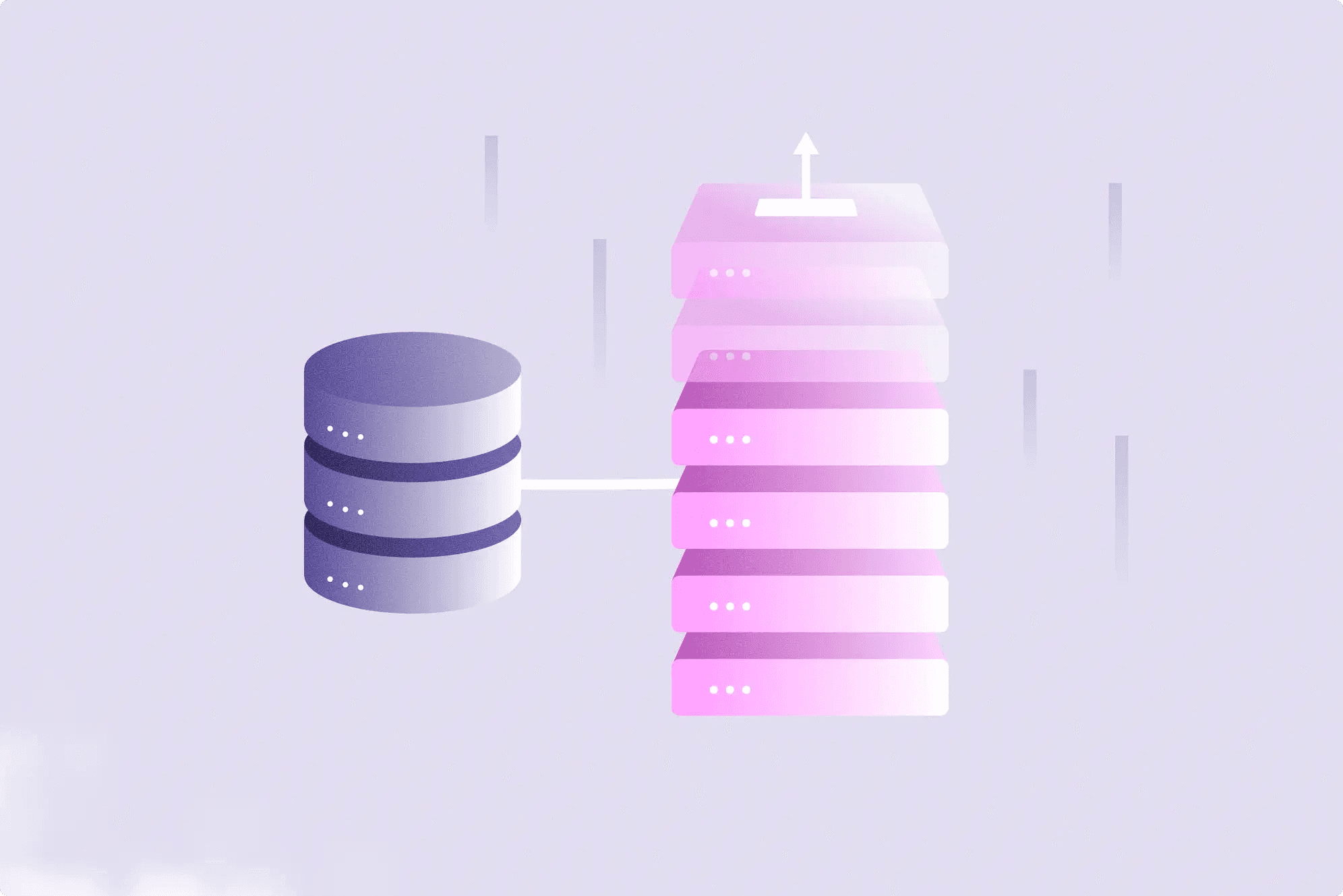
Large-scale workloads. No architectural ceiling.
Whether your estate runs on AWS or Azure, Tessell is built for storage at scale, with multi-disk striping, NVMe-backed shapes, and storage that grows with your data independently of compute. No forced re-architecture when the workload demands more.
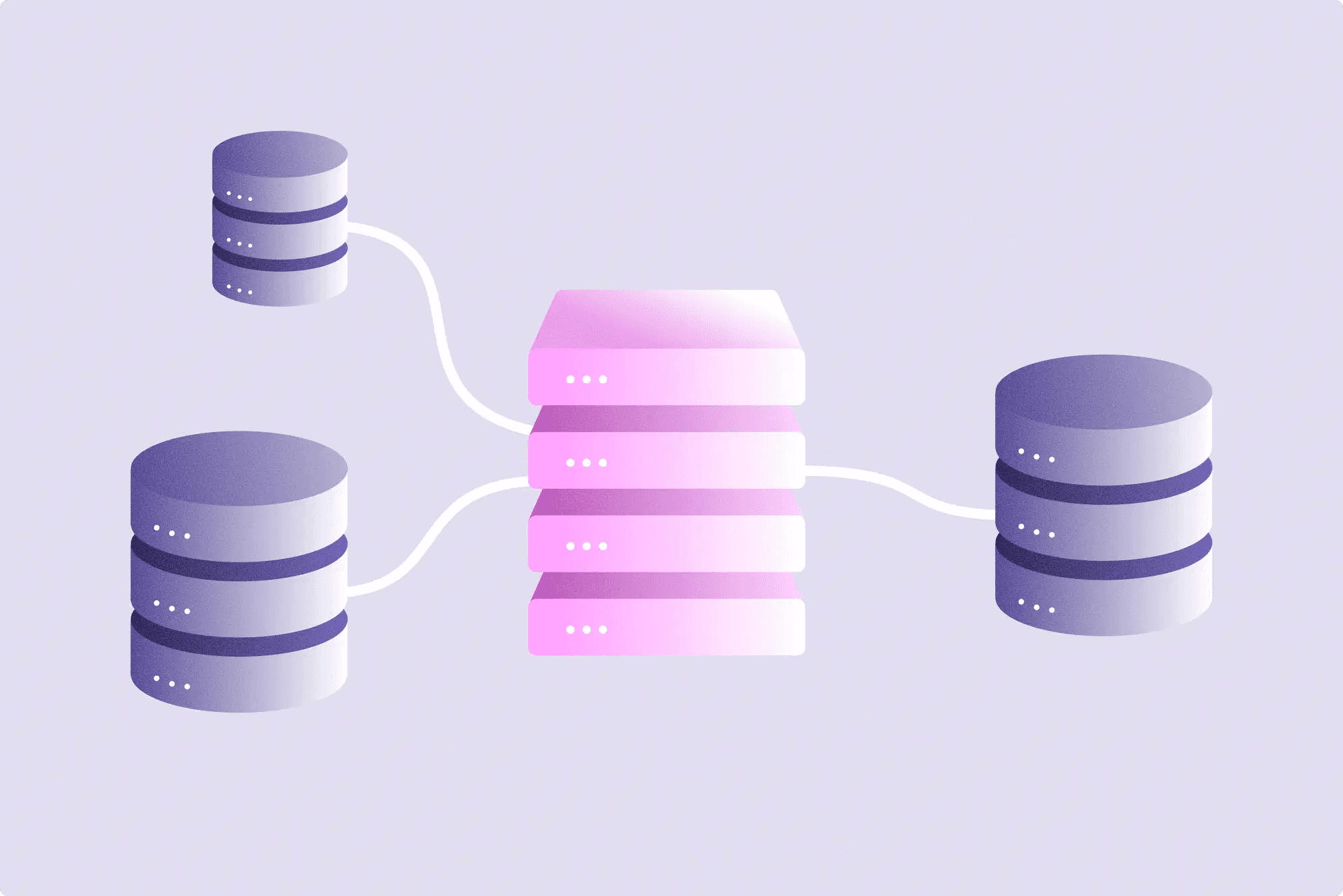
One VM. Multiple database instances.
Tessell's multi-service model lets a single VM host multiple isolated database instances simultaneously. Higher density means fewer servers to run, manage, and patch, with no trade-off in isolation.
Enterprise workloads with documented outcomes. No projections.
"Our migration of 500+ critical Oracle databases to Azure with Tessell was a major milestone in our transformation journey. Tessell’s managed service has already reduced complexity and costs, and we’re excited about what’s next. (The new Data Ecosystem capabilities and Microsoft Fabric integration open up powerful possibilities for unifying operational and analytical data, and we look forward to exploring how they can help us unlock even greater value from our data in the future.)"

"Tessell enables Forbes’ mission, reducing database costs >25%, improving customer database-backed page load times 42%-50%, and by providing internal on-demand development environments in less than 7 minutes."
Same workload. Three architectures.
Every database architecture forces a trade-off between control, operational burden, and how far performance can scale. The question isn't which is best. It's which trade-off you can live with, and whether you have to make one at all.
Fully managed services
Lowest overhead, fastest start. Optimized for simplicity, one engine, provider-managed infrastructure, performance that scales with compute. The right choice when that simplicity is exactly what you need.
Self Managed
Total control, total ownership. Every runbook, every patch, every failover, yours. Right choice for teams with deep in-house expertise who want zero abstraction and full accountability.
Tessell
Managed automation with full access retained. IO scales without scaling cores. One control plane, your cloud account, dedicated engineering from POC through production.

Get StartedSee what this looks like for your environment.
Every workload sizes differently. Our free pre-migration assessment takes two days, right-sized infrastructure and IOPS model out. No commitment, no obligation.