






Production data, controlled at every hop. By architecture
Data Access Policies define who can access what data, where it can go, and in what form, enforced by Tessell's architecture, not by policy documents. Sharing and replicating snapshots, refreshing lower environments, masking sensitive fields - all from one control plane.
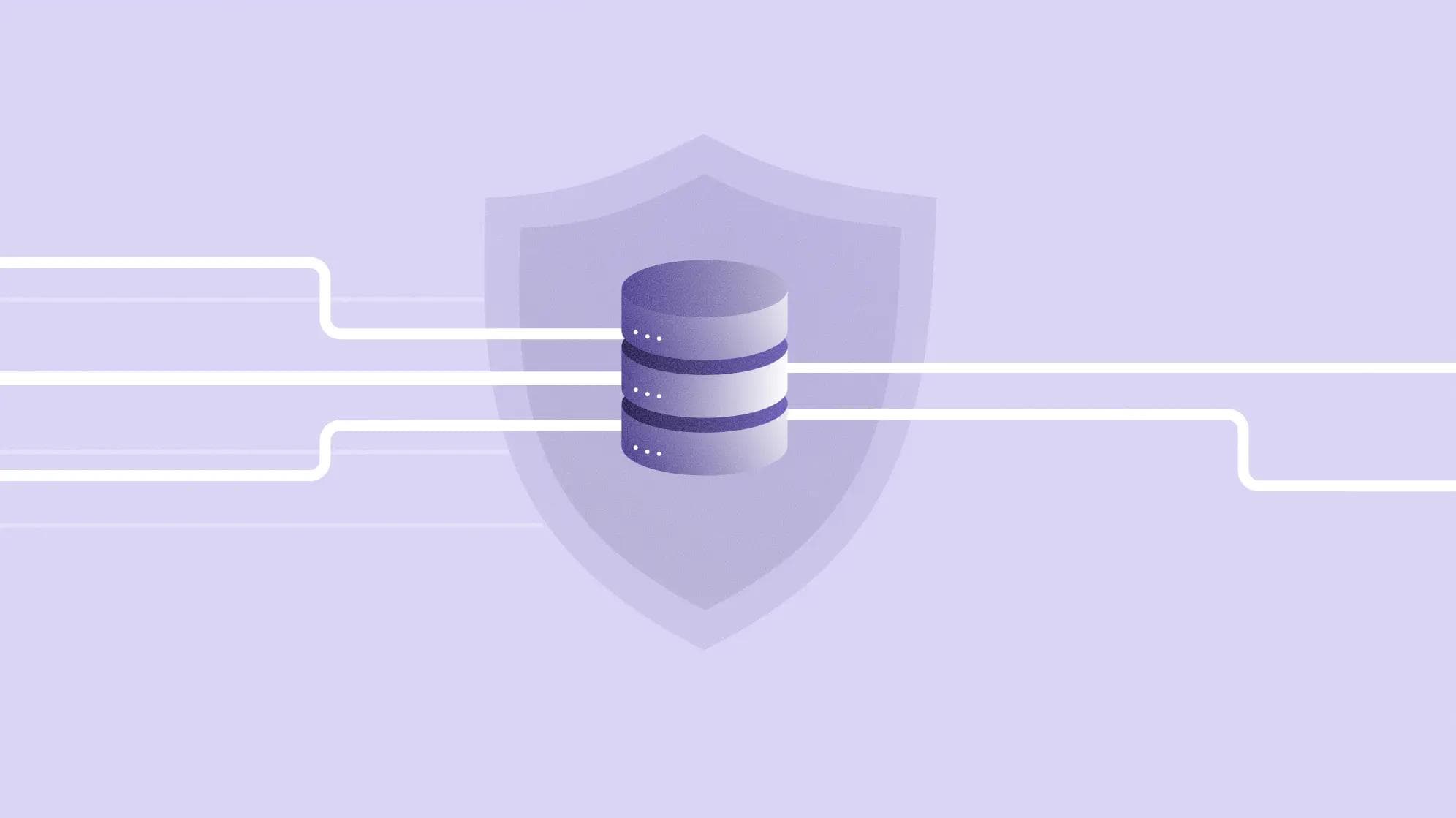
Every team has a data access policy. The hard part is enforcing it at every hop
Most organizations have put real thought into how production data should be handled. The gap is structural: when data actually moves across regions, into lower environments or between teams, the rules don't automatically travel with it.
Sharing outpaces documentation
Snapshots cross regions, lower environments refresh from production, each sensible in the moment. Over time the sharing landscape is hard to reconstruct, and compliance demands controls informal sharing can't produce.
Masking depends on who runs the script
The masking workflow works most of the time. Exposure lives in the exceptions, when a refresh runs and the script doesn't, sensitive data reaches a dev environment unmasked, with no signal.
Access doesn't revoke itself
When someone changes roles or leaves, the snapshots and clones they could reach don't disappear. Access to production data grows and rarely shrinks, and informal grants go undocumented, an audit nightmare.One policy for every artifact in every region.
A Data Access Policy is a structured rule defining what data flows where, who can access it, and in what form. The AM produces the artifacts and DAPs control how your team accesses them.
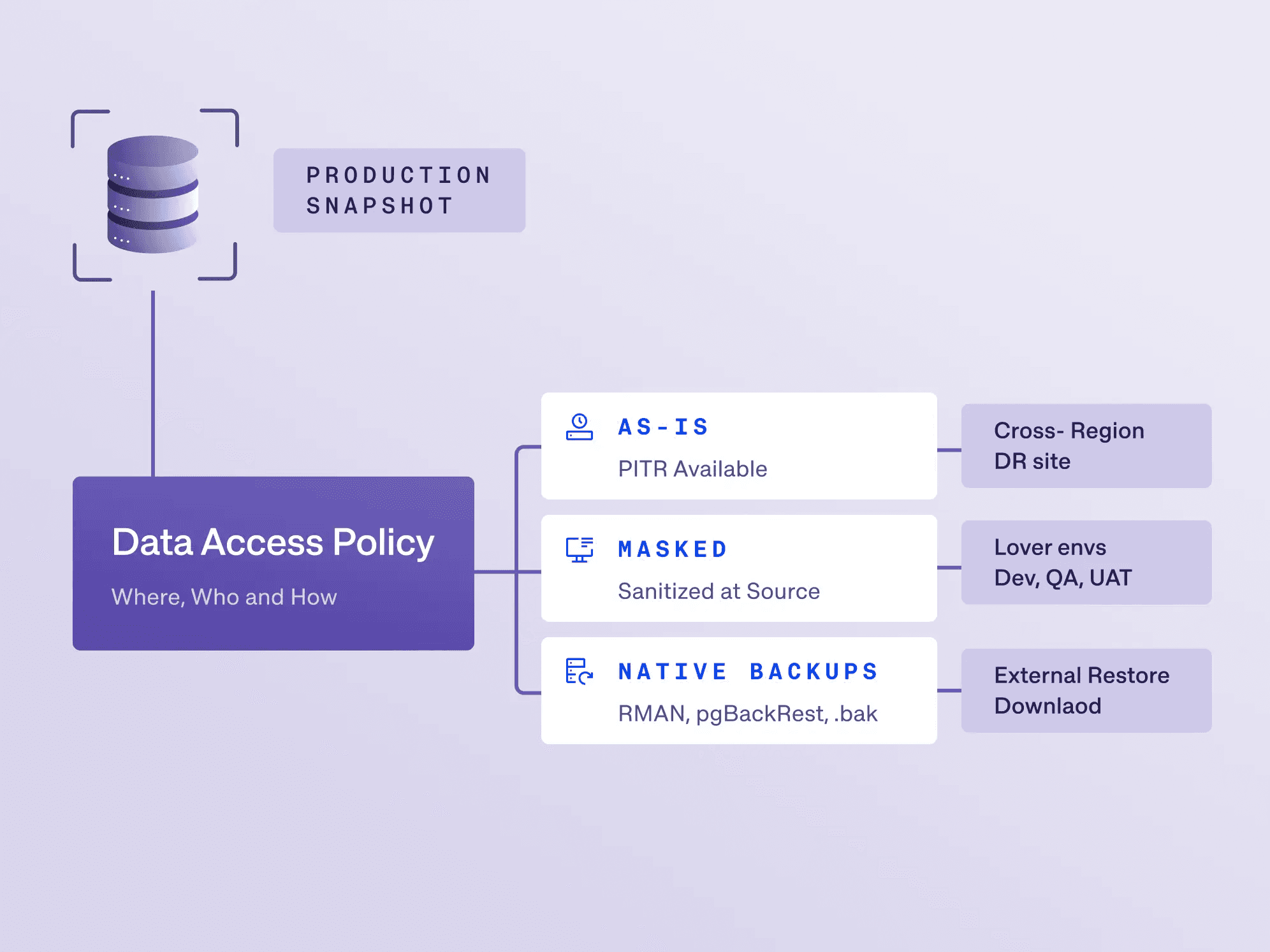
From the moment data leaves the source, the DAP controls where it goes and who gets it.
A single policy defines the destination, the recipient, and the form and applies that rule to every snapshot, clone, and refresh that follows. No manual scripts, no informal exceptions, no ad-hoc sharing patterns to audit later.
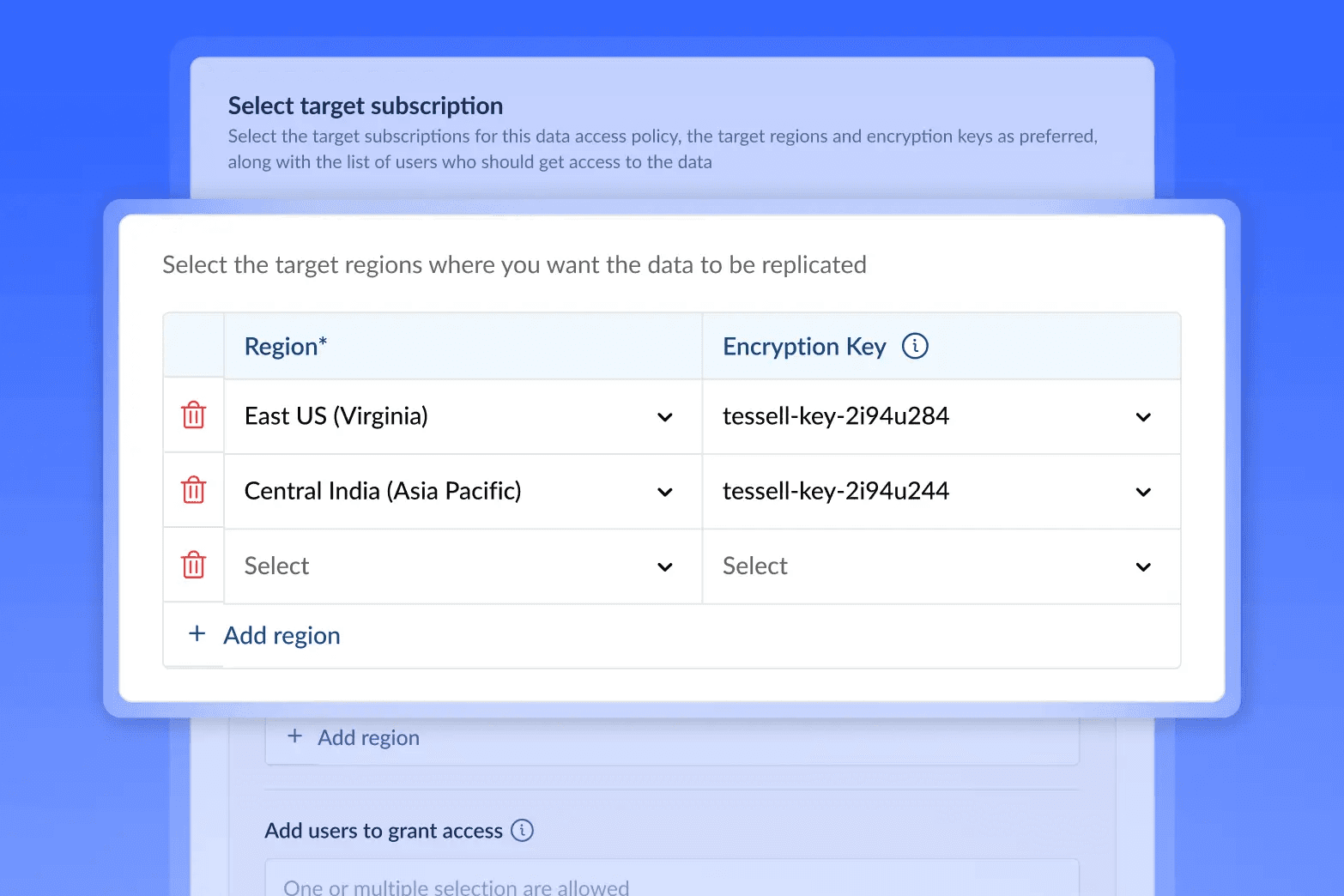
Cross-region sharing
Replicate snapshots across regions inside your own cloud provider, same subscription or different. Cross-region DR built in. Access governed by the policy, not by manual snapshot copy.
- Single-region or cross-region replication - defined per policy, applied to every snapshot.
- Cross-subscription support - Oracle supports cross-subscription sharing on AWS and Azure.
- Continuous replication - secondary regions stay current as new snapshots are produced.
- Encryption controls - separate encryption key per target subscription, BYOK on AWS and Azure.
Masked snapshots
Apply organization-provided masking scripts at snapshot creation. Lower environments get production-quality data, without the production-quality risk.
- Sanitized snapshots from any AM snapshot - automated or manual, same flow.
- Versioned masking scripts - uploaded to Script Library, applied at snapshot creation, fully auditable.
- Scheduled sanitized snapshot creation - configure prefix, script version, retention, and frequency.
- Clone directly from sanitized snapshots - same flow as standard snapshots, with masked data baked in.
User and group access
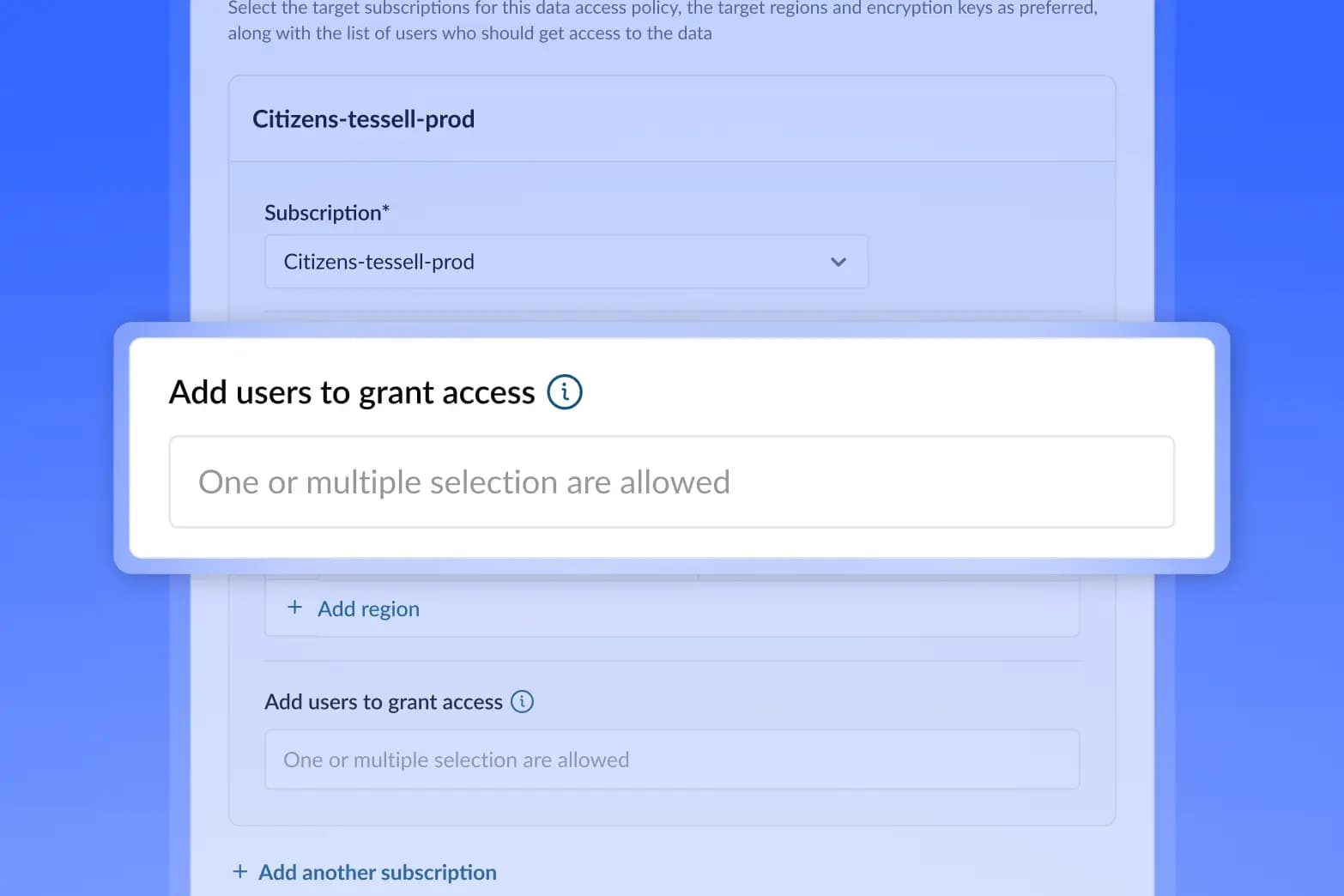
Define exactly who can access the data the policy governs. Users or user groups, scoped per policy. Access revocable in one step.
- Per-policy access lists - user or group, defined at policy creation.
- Multi-DAP support - a single user or group can be added to multiple policies.
- Revocation by deletion - remove the policy, remove the access, remove the cloud snapshot.
- No informal sharing - every data access path is governed by a documented policy from day one..
Form control
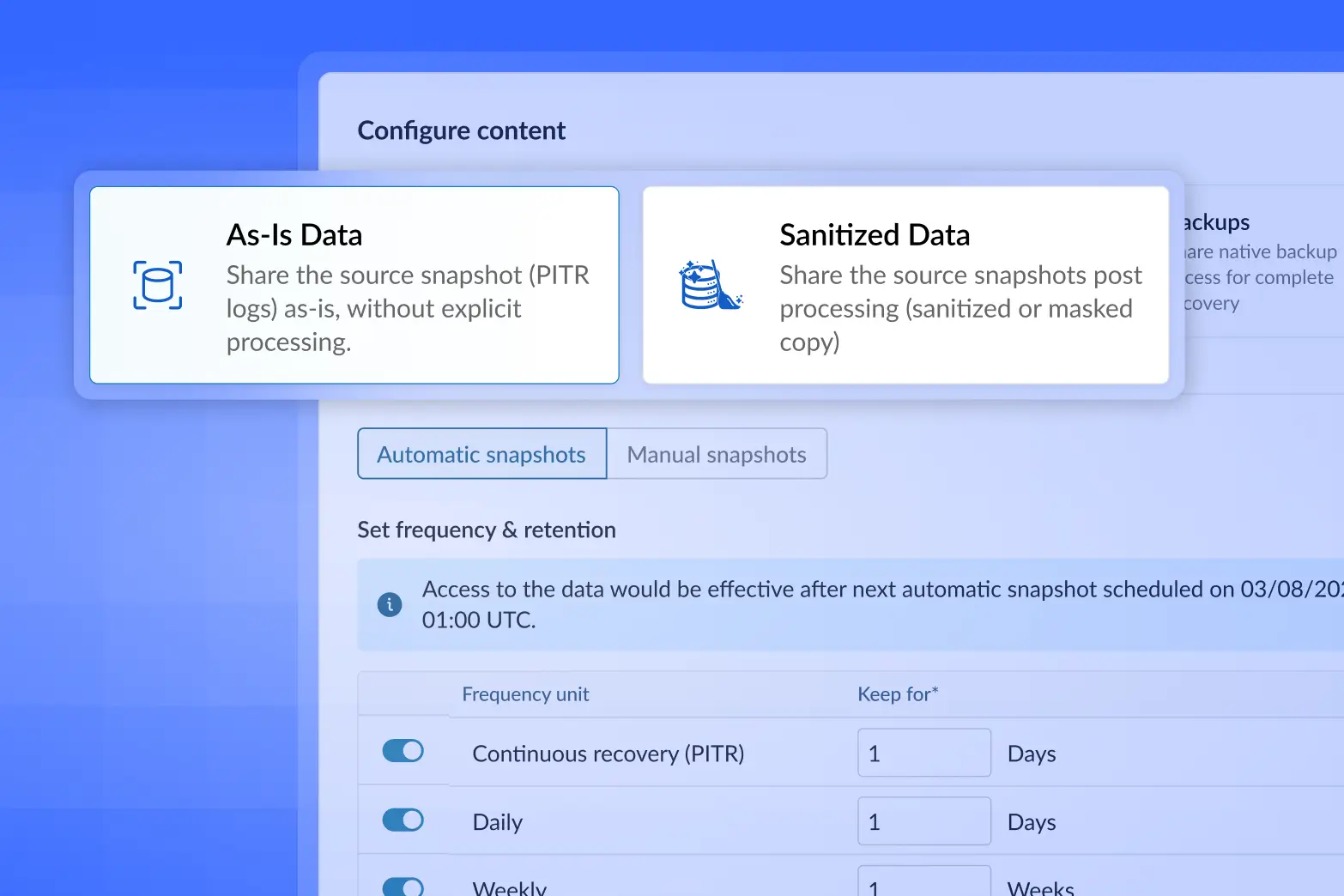
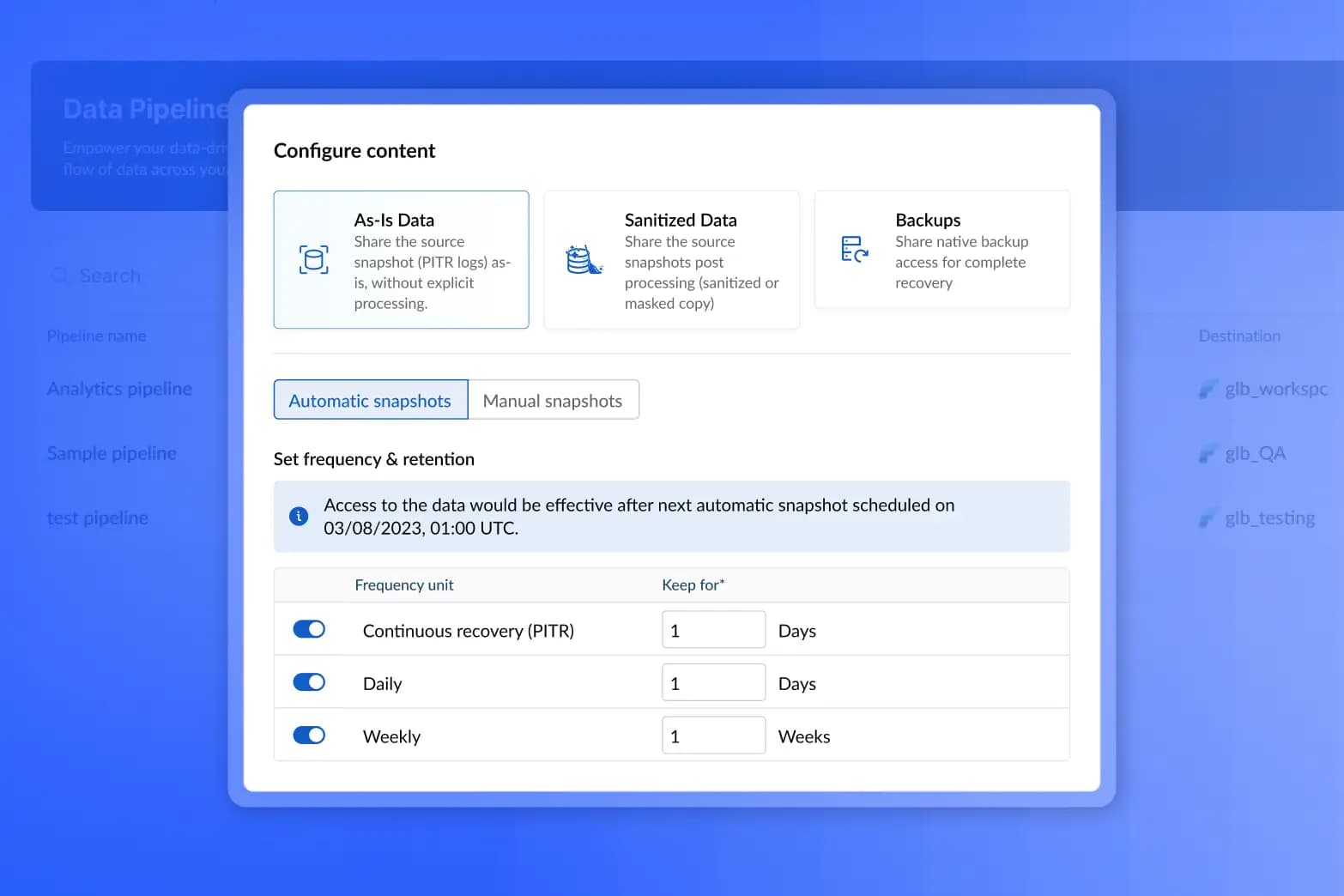
Three content types per policy: as-is, masked, or native backup. PITR is available only for as-is sharing, masking precludes point-in-time recovery by design.
- As-is sharing - production snapshots unmodified. Includes PITR access.
- Sanitized sharing - masked snapshots only, masking enforced at snapshot creation.
- Native backup sharing - backup files (RMAN, .bak, pgbackrest, Percona) for full recovery use cases.
Four layers of data management, architected into one platform.
Tessell connects protection, access, governance, and activation into a single platform. Managed from one control plane, with no gaps between them.
Availability Machine
Continuously captures snapshots, transaction logs, and native backups across every database and every engine. The foundation everything else depends on.
How AM worksDataflix
Turns the AM's output into a self-service catalog. Any team, DBA, developer, QA, can clone, restore, or download from any point in time without filing a ticket.
How Dataflix worksData access policies
Governs what data flows where and who can access it, same region, cross-region, or cross-subscription. Masked or as-is. Enforced by architecture, not policy documents.
You are hereData ecosystem
Streams live changes from operational databases into data lakes or warehouses for analytics and AI, without separate CDC tooling, or ETL overhead
How Data Ecosystem works
Ready to see how data access policies would work in your environment?
Talk to a Tessell engineer, not a sales rep. Bring your environment, your compliance requirements, your data-sharing patterns. Walk away with a clear picture of what DAPs would change for your team.