






Every database protected. Every recovery proven
Tessell's Availability Machine is provisioned automatically with every database, continuously capturing snapshots, transaction logs, and native backups across every engine and every cloud. Protection isn't a configuration task. It's the default state.
Database protection comes in layers. Recovery fails in the gaps
Backup, recovery testing, retention governance, and replication have each been solved independently. Connecting them across every database, every engine, every cloud is where the hard problem lives.
Backup and recovery are separate workflows
A successful backup says nothing about whether it can be recovered. The two are validated independently, and estate-wide recovery health is a layer most teams build by hand.
Protection policies live outside the provisioning layer
A database gets provisioned; its protection doesn't. Schedules, retention, and RPO targets come after, so every database starts unprotected and standardizing takes constant manual work.
RPO and RTO targets are defined, not tested
Recovery objectives live in continuity plans, but whether the architecture supports them goes unverified until a real incident. A tested RTO is the only guarantee.One Availability Machine for every database. Always on
Tessell’s Availability Machine enables protection while a database is provisioned and your entire estate operates under a consistent, auditable protection posture from day one.
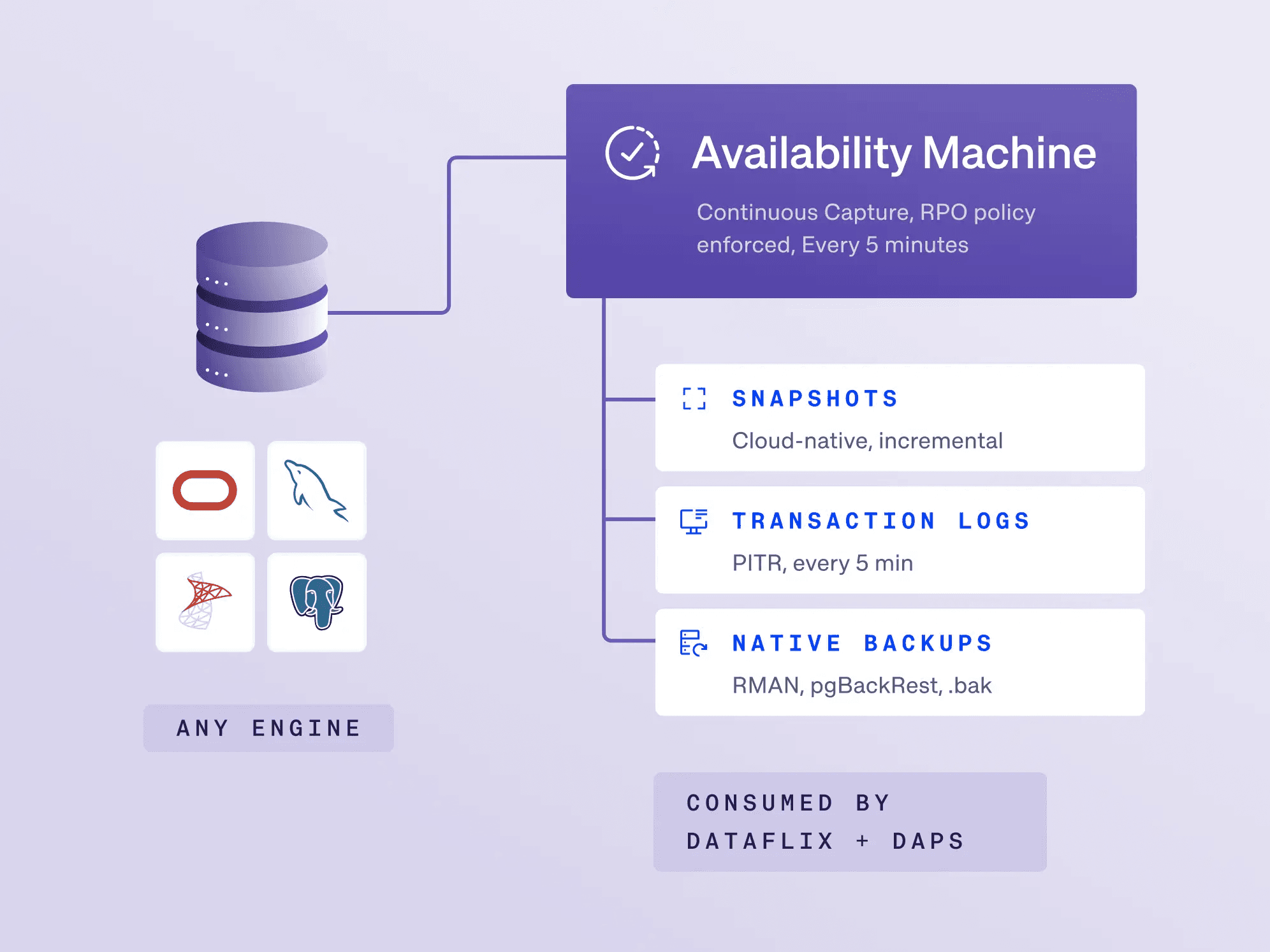
Four things the AM handles automatically, from the moment your database is provisioned
From the moment your database is provisioned, the AM is already capturing data, enforcing retention, and producing everything recovery needs.
Continuous capture
Snapshots, transaction logs, and native backups captured automatically, across every engine, without manual setup.
- Engine-native backups using each engine's own tooling
- HPC hybrid backup pairs snapshots with native backups to minimize data loss.
- Backup is built into provisioning so nothing to configure, license, or maintain.
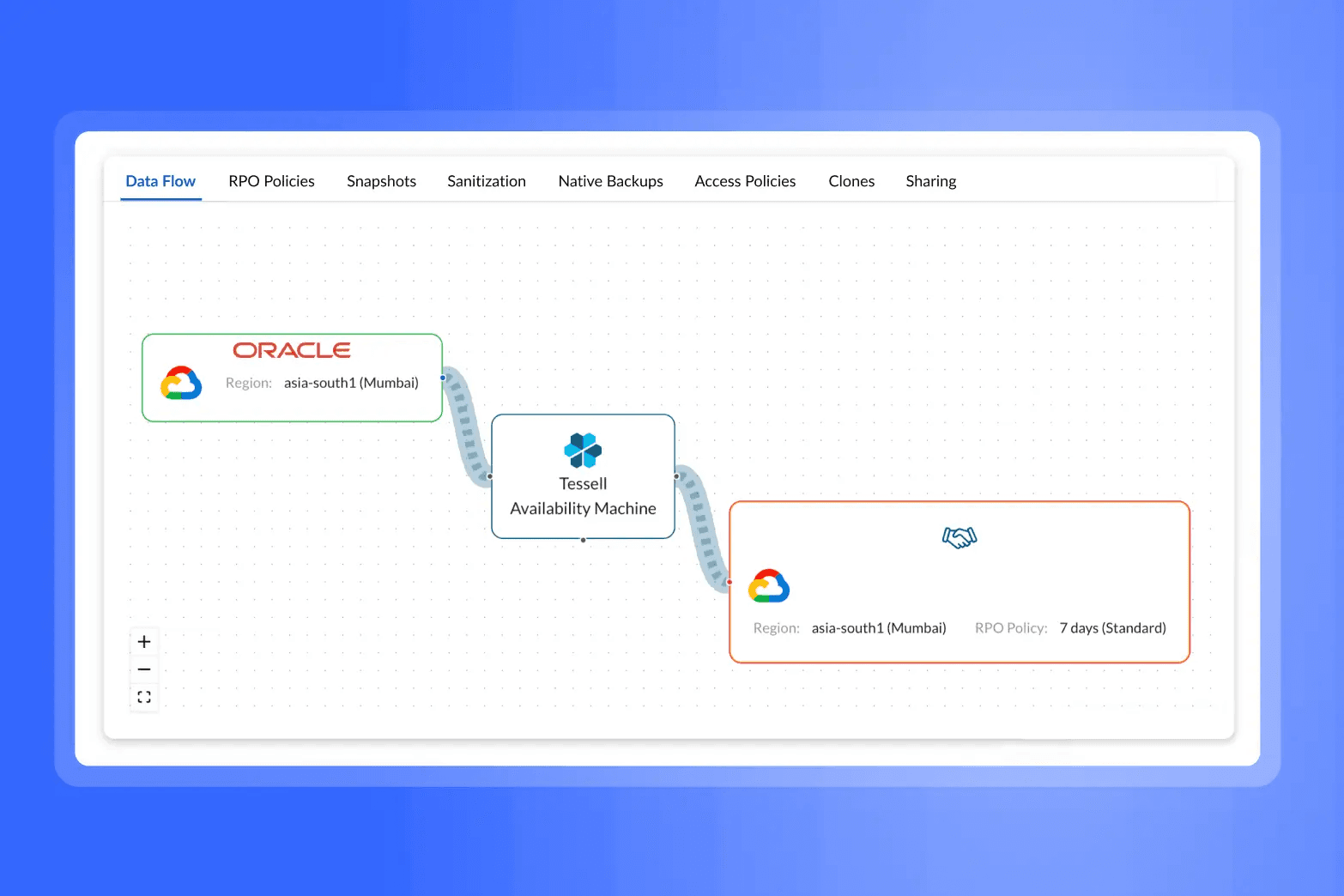
Retention policies
Define how long data is kept, at what frequency, and across which regions across every database in the estate.
- Up to 35-day retention, with transaction logs captured every five minutes for PITR.
- Custom retention tiers align to compliance, with publishing status for governance.
- Long-term archiving automates yearly snapshots without manual work.
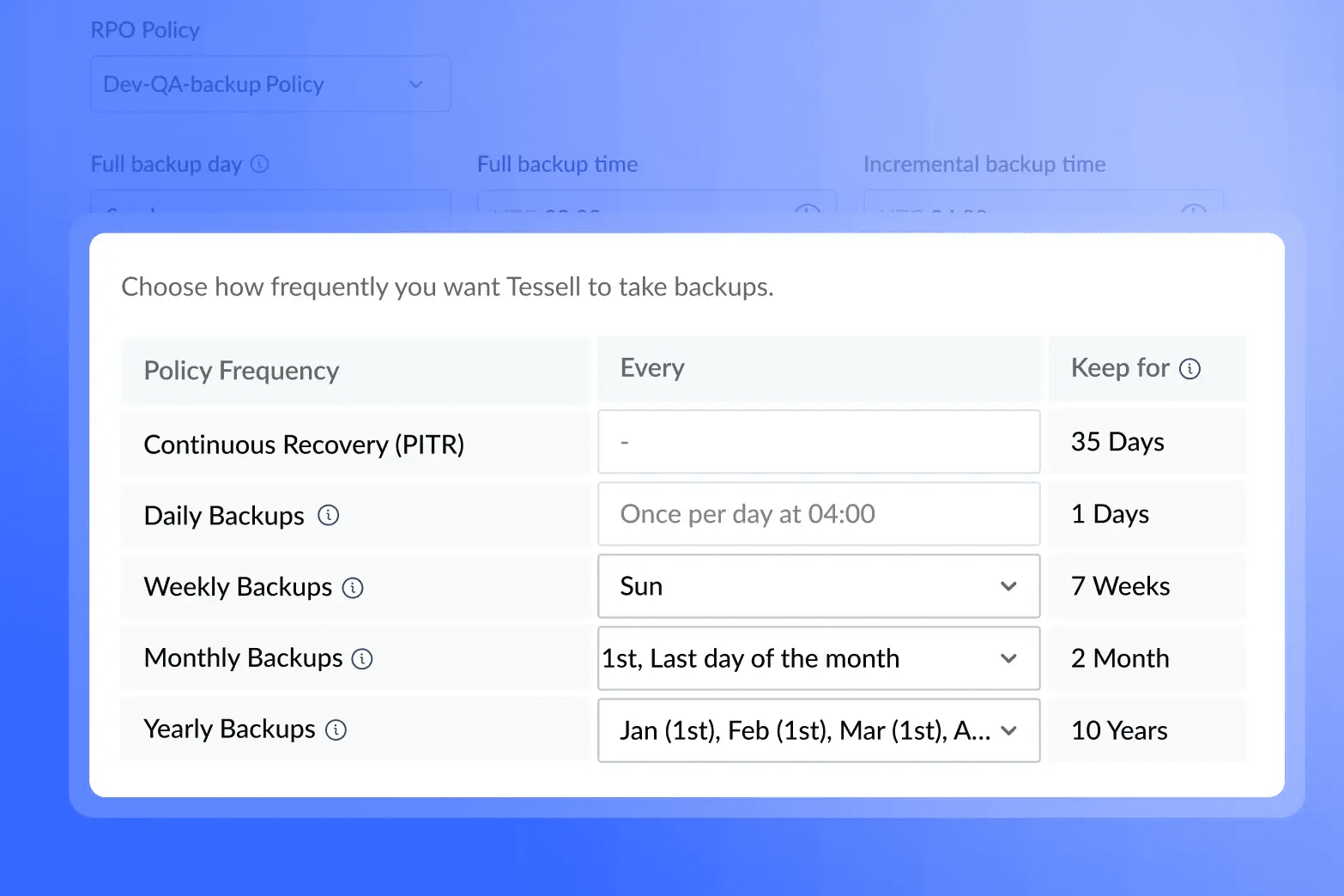
Backup visibility
Every database, every backup, every region, visible in one place. No manual checking across systems.
- One estate-wide dashboard to show protection status, engine, cloud, and region.
- Every backup shows live status, with timestamps.
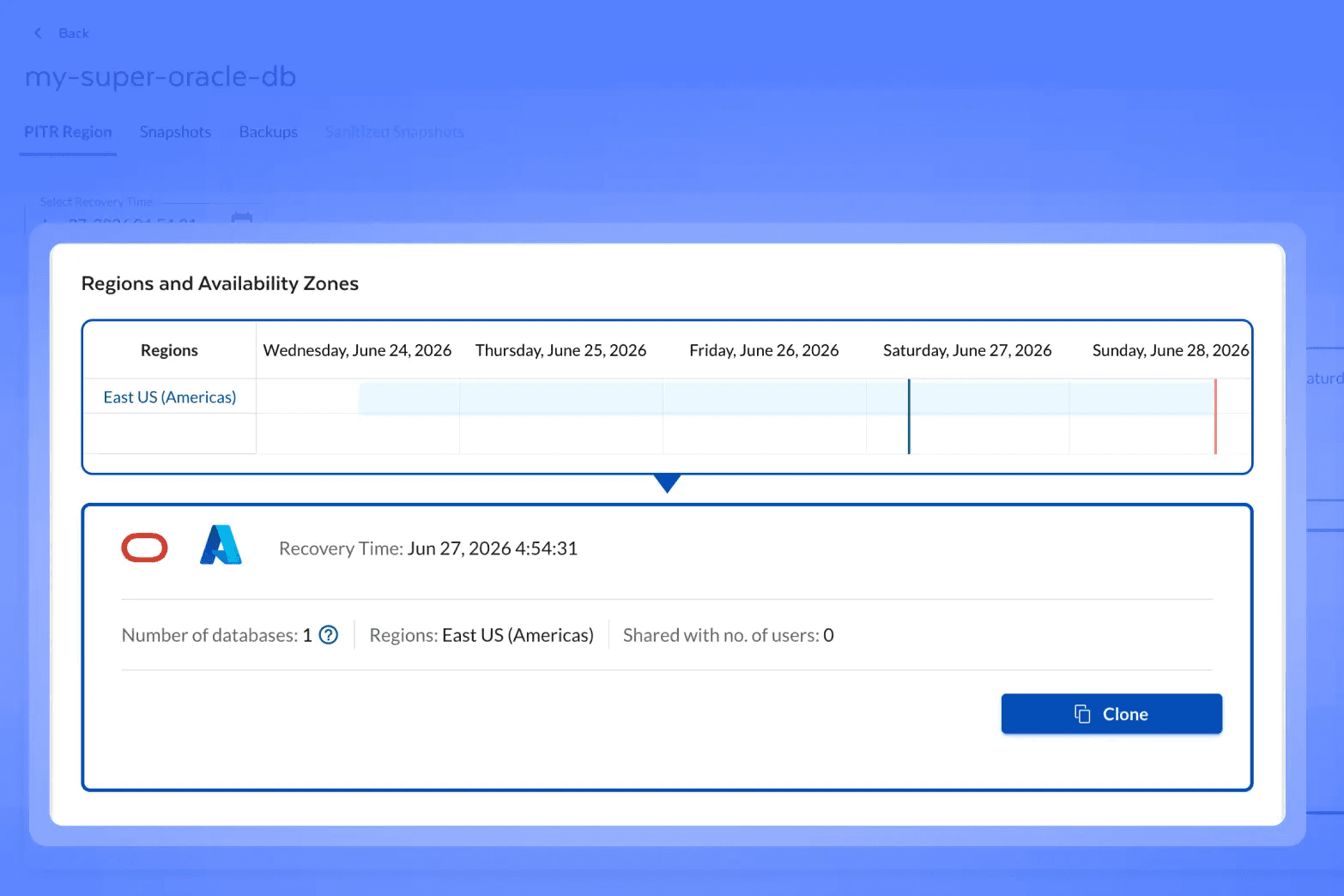
- Live data flow shows region, status, access policy, and sharing.
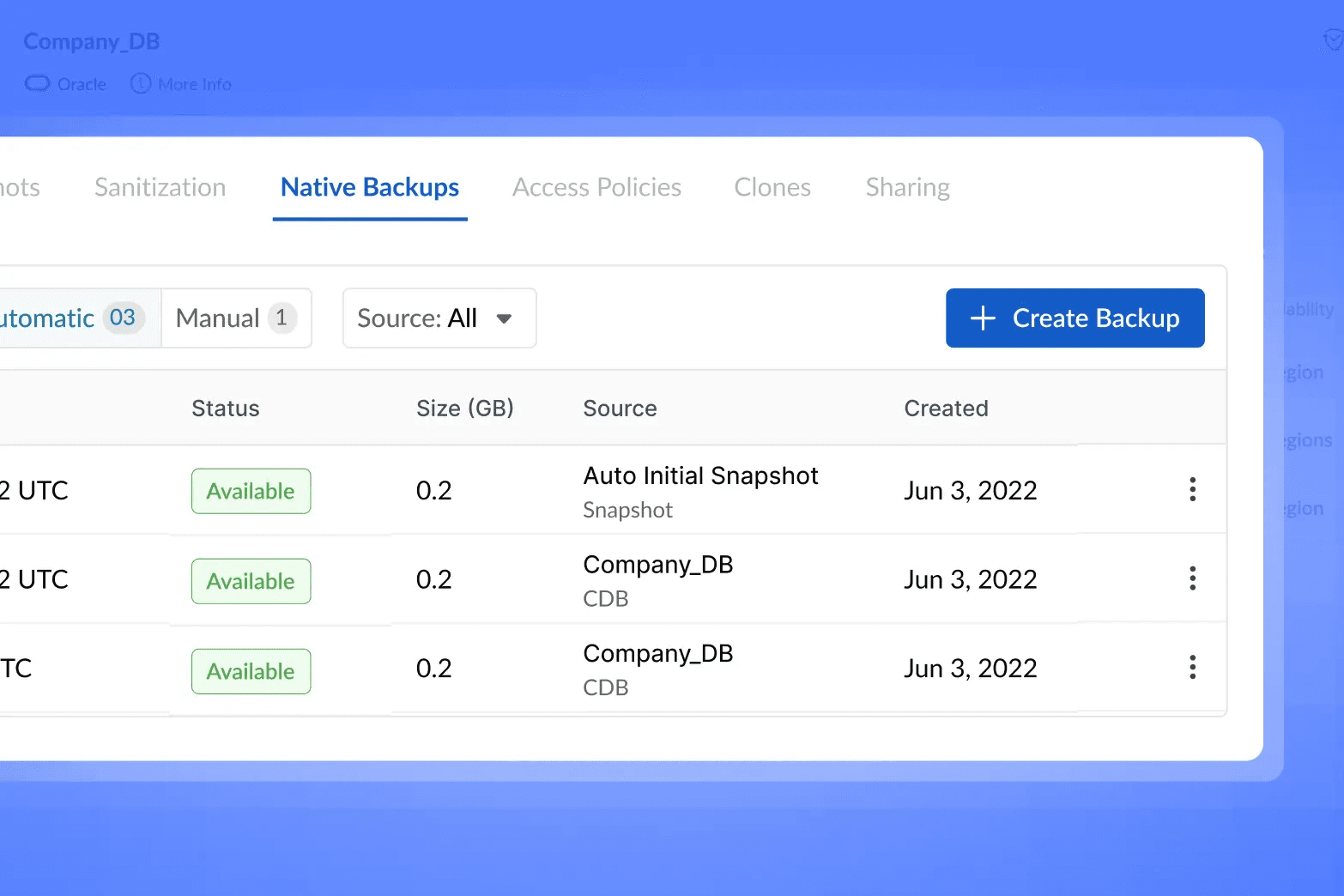
Recovery artifacts
The AM produces and retains everything recovery requires. Acting on those artifacts is what Dataflix is built for.
- Restore any snapshot to a new VM without touching source.
- Recover to the exact minute before failure, not nearest snapshot.
- Deleted-service snapshots and backups stay recoverable until retention expires.
Four layers of data management, architected into one platform
Tessell connects protection, access, governance, and activation into a single platform. Managed from one control plane, with no gaps between them.
Availability Machine
Continuously captures snapshots, transaction logs, and native backups across every database and every engine. The foundation everything else depends on.
You are hereDataflix
Turns the AM's output into a self-service catalog. Any team, DBA, developer, QA, can clone, restore, or download from any point in time without filing a ticket.
How Dataflix worksData access policies
Governs what data flows where and who can access it, same region, cross-region, or cross-subscription. Masked or as-is. Enforced by architecture, not policy documents.
How DAPs workData ecosystem
Streams live changes from operational databases into data lakes or warehouses for analytics and AI, without separate CDC tooling, or ETL overhead
How Data Ecosystem works
Ready to see what this looks like for your database estate?
Talk to a Tessell engineer, not a sales rep. Bring your environment, your engines, your cloud. Walk away with a clear picture of what the AM would change for your team.