




Operational data, ready for analytics and AI
Tessell Data Ecosystem streams live changes from your operational databases into Microsoft OneLake and other lakes and warehouses managed from the same console as your databases, with no separate pipeline infrastructure to operate.
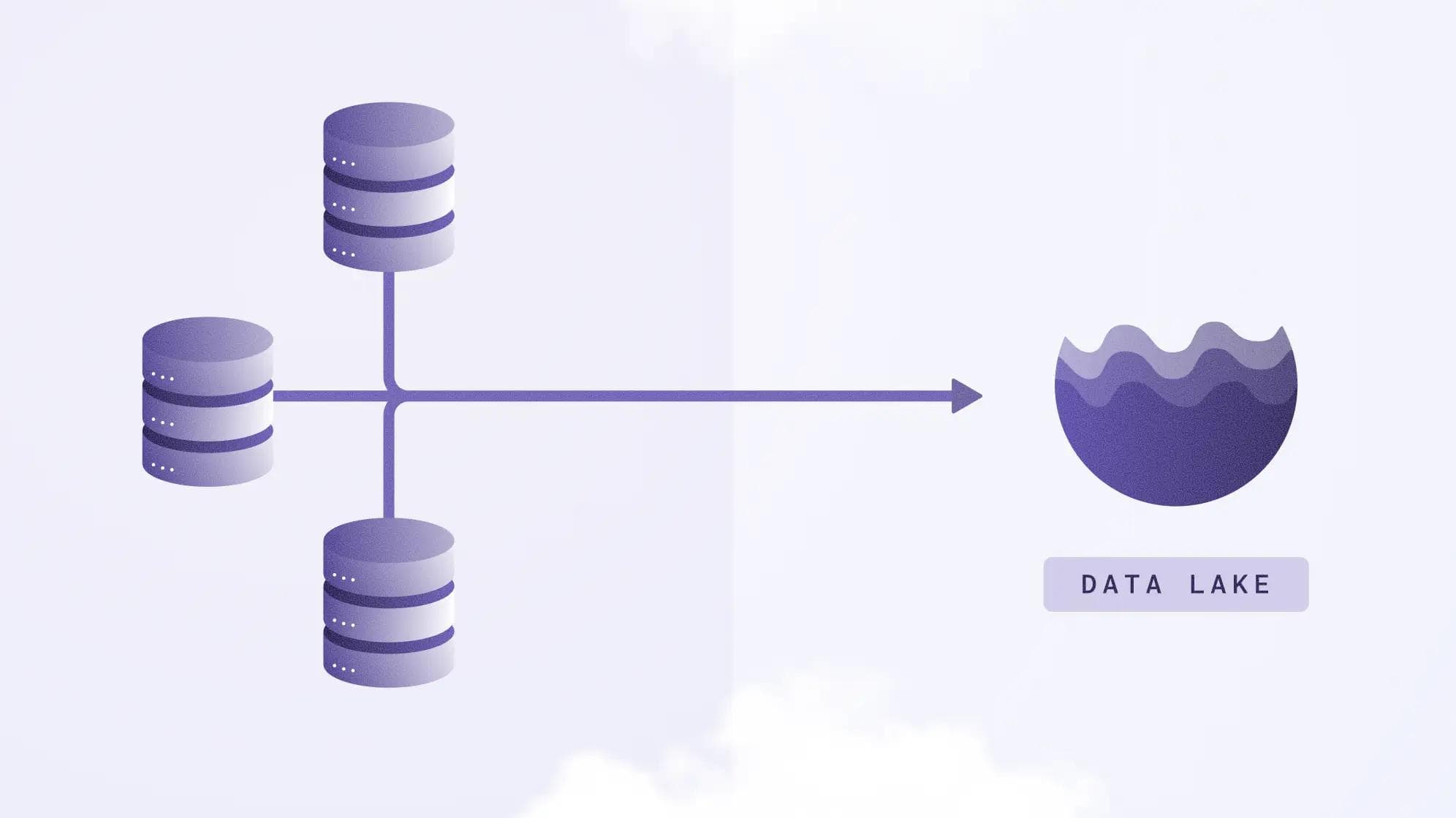
Operational data and analytical data are managed in separate systems. The pipeline between them introduces latency by design.
Most teams have the analytical systems they need. What they don't have is operational data current enough to make those systems useful. The gap between the production database and the data warehouse is where business decisions go stale.
Pipelines are brittle and expensive
Operational pipelines are assembled from multiple components, each with its own complications, and every link adds surface to maintain. For Oracle, change capture needs database-layer configuration before any pipeline can run.
Operational and analytical data live in silos
Analytical systems are built for query performance on transformed data, not real-time operational state, so the gap is by design. Decisions get made, and AI models trained, on data already stale.
Data integration sits outside database governance
When integration runs separately from the database layer, the database's own access controls and encryption don't extend to the pipeline or target, and the stack's cost is unsustainable as AI accelerates.From production database to analytical system, in near real time
Tessell's Change Data Capture engine reads transaction logs directly, processes changes through managed stream handling, and lands the data in your analytical system, without you managing any of the infrastructure and tooling in-between.
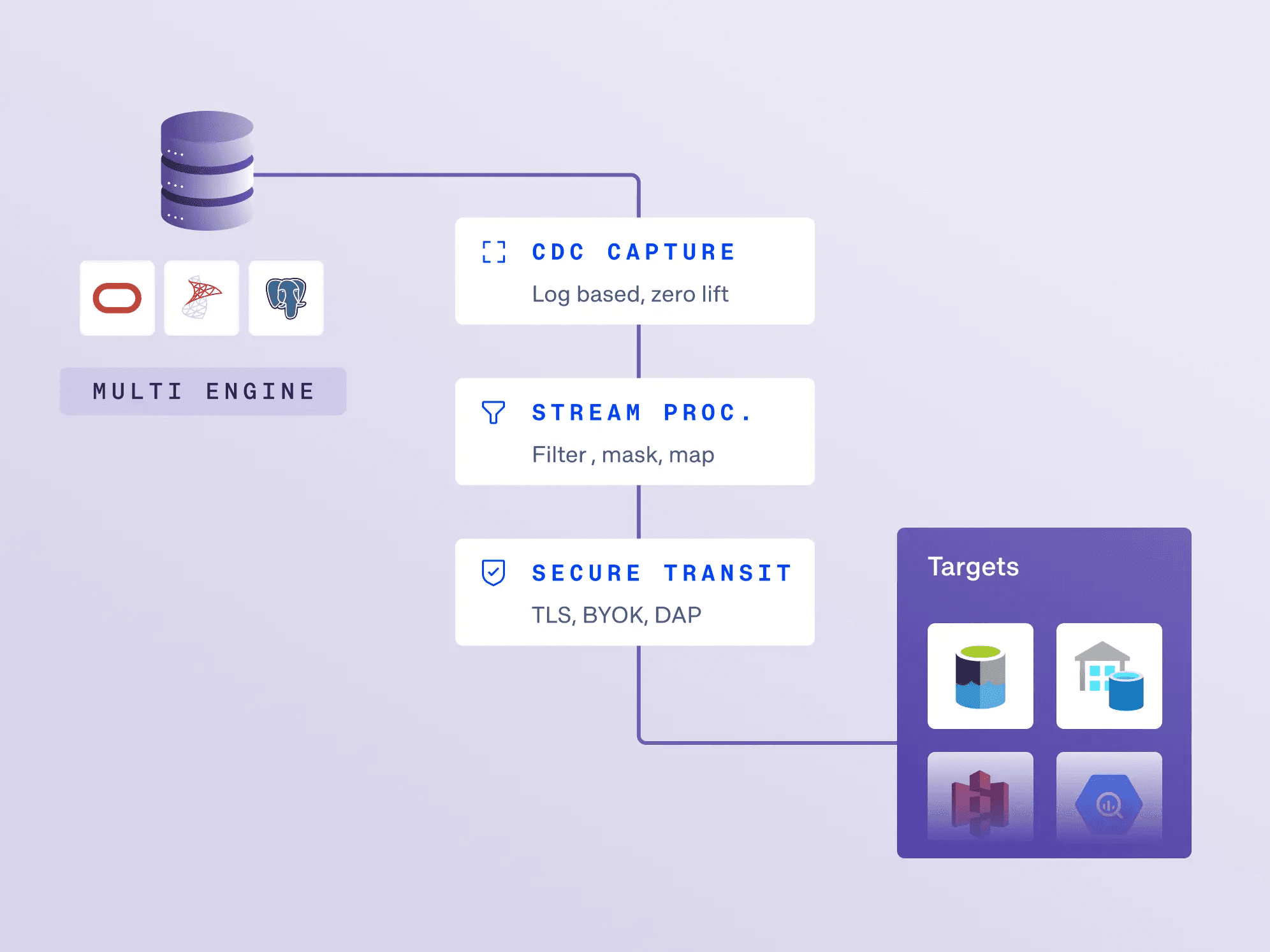
From the moment a change happens in production, the pipeline carries it to where analytics needs it.
Change Data Capture at source
Continuous capture from transaction logs of Tessell-managed databases. No queries against the source, no performance impact, no specialist tooling.
- Multi-engine source support - Oracle, SQL Server, PostgreSQL, MySQL captured from native transaction logs.
- Log-based capture - no full-table scans, no performance impact on the source database.
- Automatic schema evolution - pipeline adapts as the source schema changes, without manual intervention.
- Granular capture scope - entire database, specific schemas, or table-level. Configure per pipeline.
Managed stream processing
Tessell operates the stream processing layer between source and target. Kafka management, retry logic, and error handling are built into the platform.
- Incremental propagation - only modified data moves downstream. No redundant full-table loads.
- Auto-correction via retries - transient errors handled automatically, no manual restart cycles.
- Built-in validation - data quality checks applied before changes reach the target.
- Sync mode control - near real-time, asynchronous, or scheduled, configurable per pipeline.
Secure, governed transmission
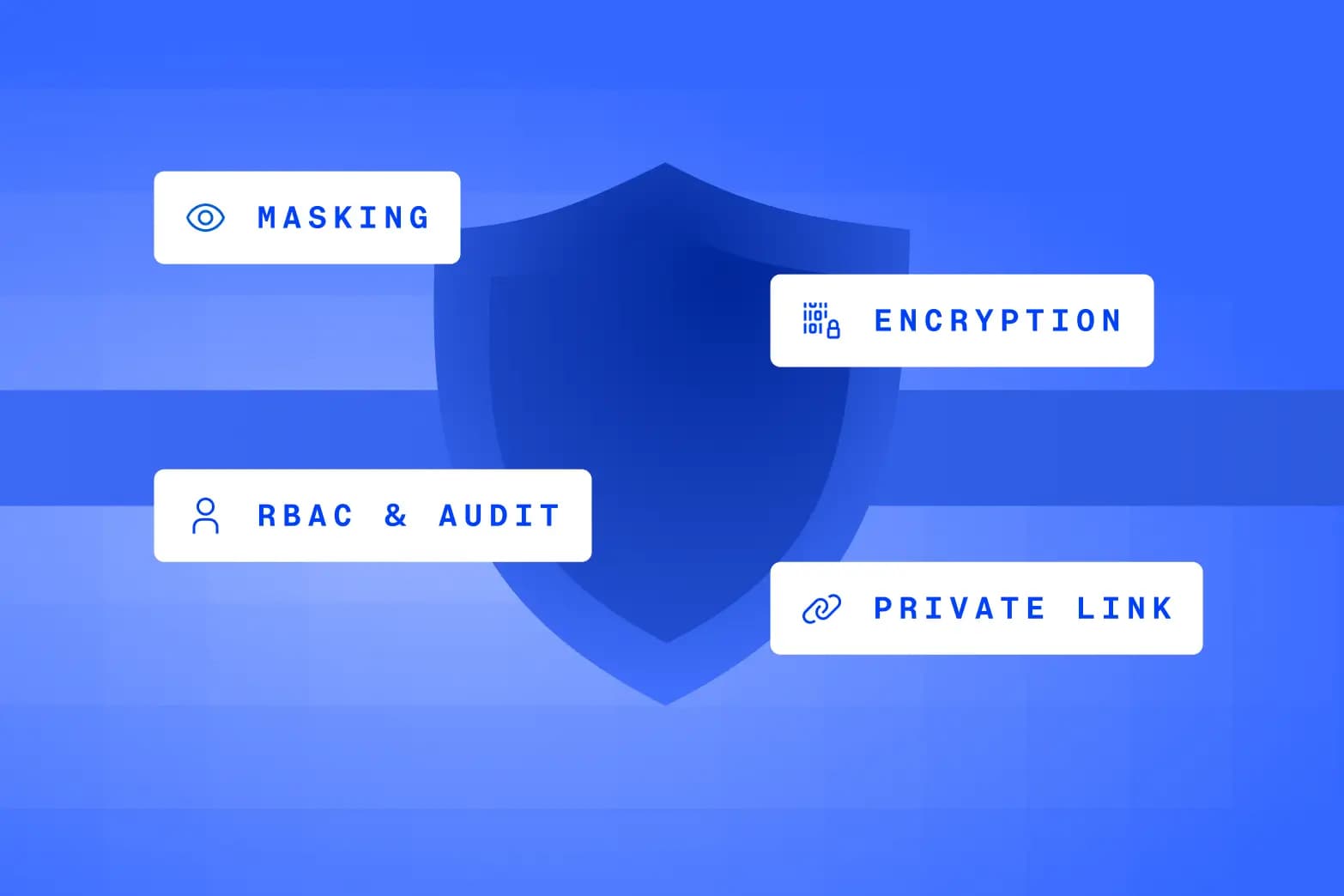
The same security and governance model that applies to your databases applies to the pipeline. RBAC, audit logging, masking, and private-link transmission are built in, not bolted on.
- Private link transmission - operational data never traverses the public internet.
- Encryption in transit and at rest - across every hop in the pipeline.
- RBAC and audit logging - consistent with the database access model.
- Data masking - applied throughout the pipeline for regulated workloads.
Unified pipeline management
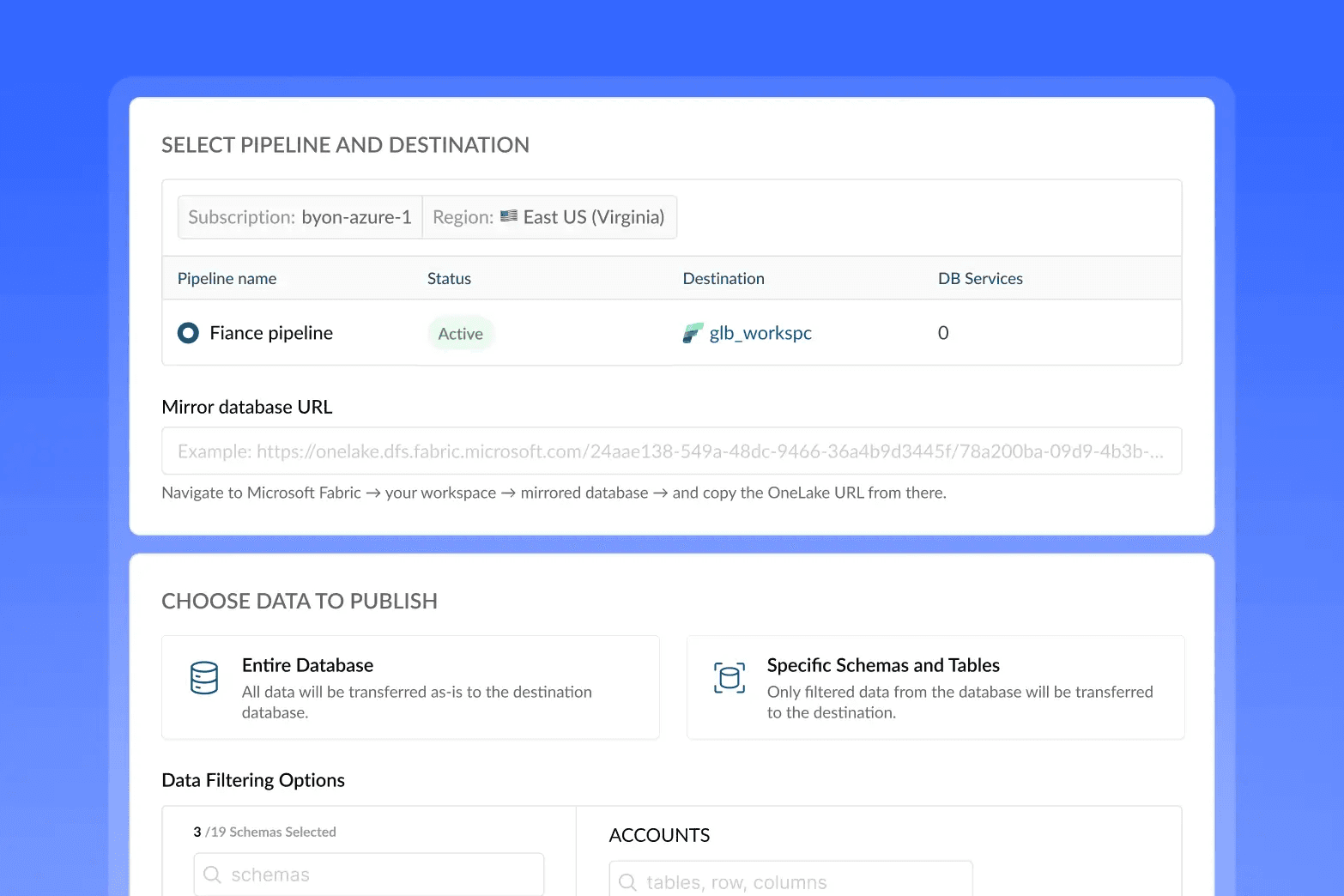
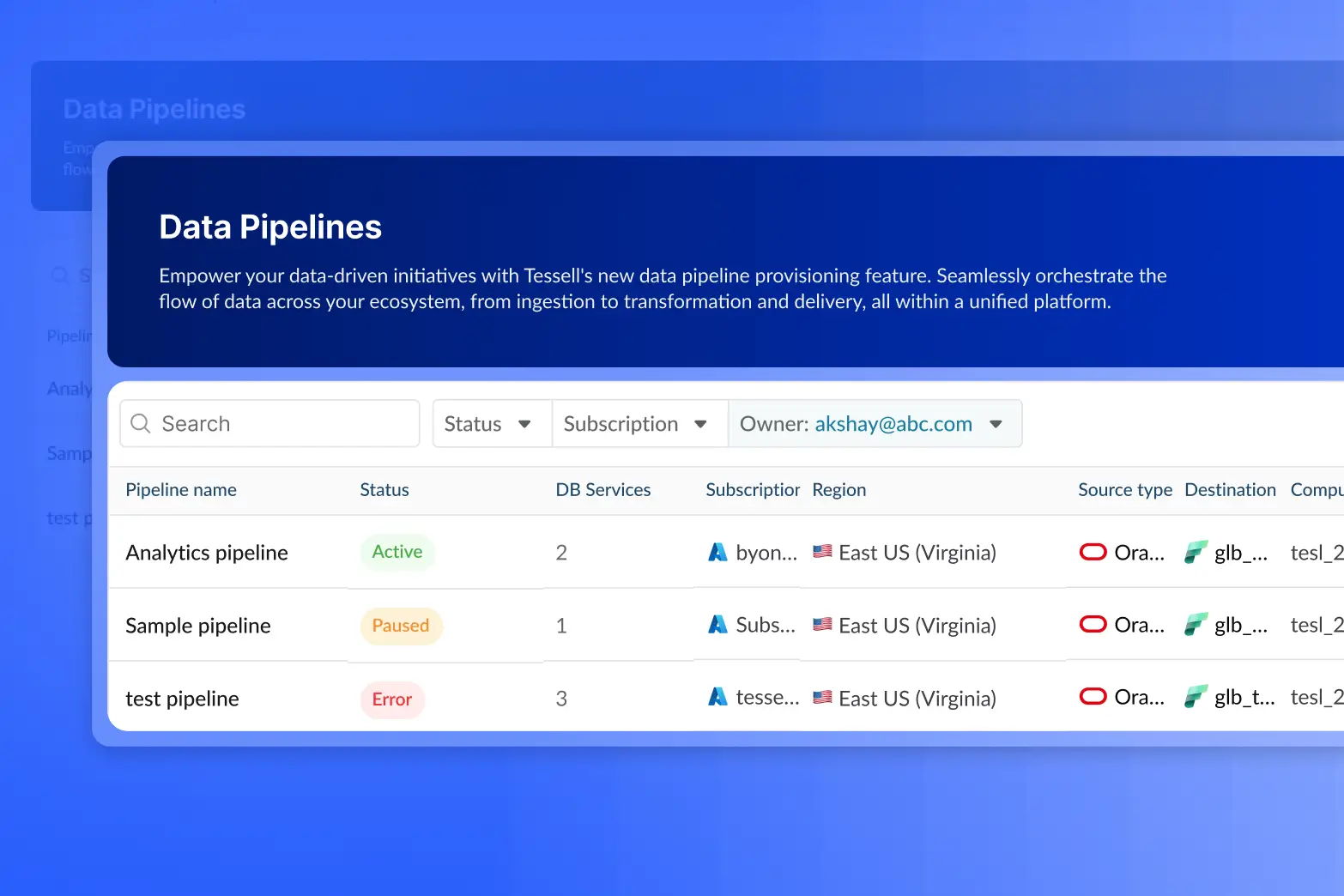
CDC setup, monitoring, and control sit inside the same console you use to manage the databases themselves. One platform, one operational model.
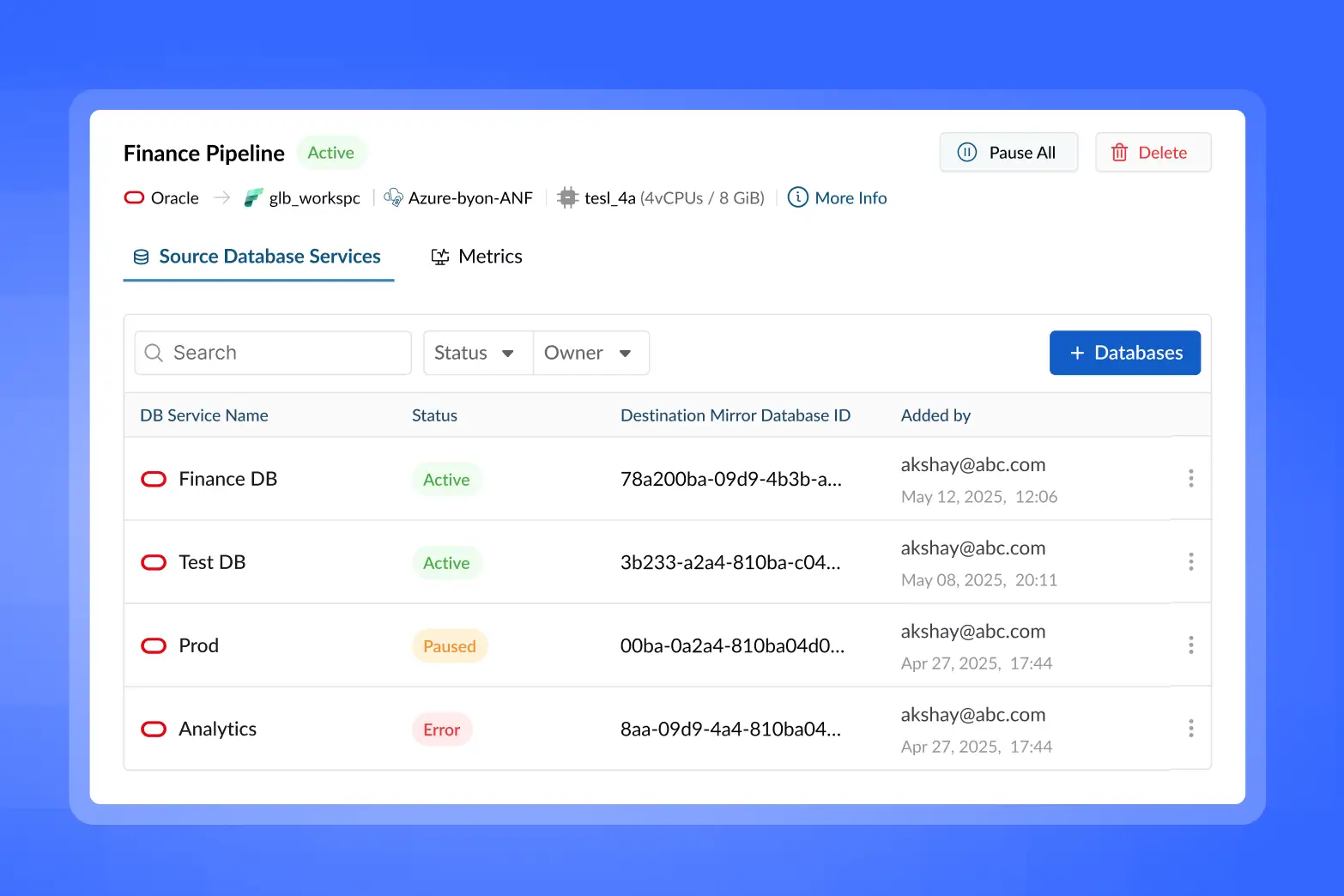
- Pipeline setup from the Tessell portal - the same console used to manage the databases themselves.
- Test syncs before activation - validate the pipeline before it goes live.
- Unified status dashboards - pipeline health alongside database health.
- Pause, resume, or delete pipelines - full lifecycle control from one place.
Four layers of data management, architected into one platform
Tessell connects protection, access, governance, and activation into a single platform. Managed from one control plane, with no gaps between them.
Availability Machine
Continuously captures snapshots, transaction logs, and native backups across every database and every engine. The foundation everything else depends on.
How AM worksDataflix
Turns the AM's output into a self-service catalog. Any team, DBA, developer, QA, can clone, restore, or download from any point in time without filing a ticket.
How Dataflix worksData access policies
Governs what data flows where and who can access it, same region, cross-region, or cross-subscription. Masked or as-is. Enforced by architecture, not policy documents.
How DAPs workData ecosystem
Streams live changes from operational databases into data lakes or warehouses for analytics and AI, without separate CDC tooling, or ETL overhead
You are here
Ready to see how your operational data could reach analytics systems in real time?
Talk to a Tessell engineer, not a sales rep. Bring your database environment, your analytical targets, and your data freshness requirements. Walk away with a clear picture of what Data Ecosystem would change for your team.