





High availability and disaster recovery you can prove. Not just configure.
Multi-AZ high availability and cross-region disaster recovery built into every engine, with automated failover and DR drills you can run as a routine operation, with full switchback, instead of a plan nobody has tested.
Trusted by enterprises at scale
Fortune 500 US bank
Five-node cluster, quarterly DR drills, 15-min RPO
Fortune 500 insurance firm
RPO 0 / RTO 30 seconds
US state environmental agency
RTO 8 hours to automatic failover
Resilience is special to set up, risky to test, and rarely proven.
Most teams can configure HA and DR. Far fewer can show, on demand, that recovery actually works the way the plan says it does.
HA and DR are specialist, manual builds.
Setting up synchronous replication, configuring failover, and writing the runbooks takes deep, engine-specific expertise, and that knowledge usually sits with a handful of people.
DR stays theoretical until an incident.
Running a real drill can carry the same operational risk as a real failover, so drills get deferred, and recovery readiness ends up assumed rather than proven.
Recovery targets live in a document.
RPO and RTO are committed in a business-continuity plan, but whether the architecture actually meets them is rarely verified until production is already down.Resilience built in, and recovery you can prove on demand.
High availability and disaster recovery configured at provisioning, automated in operation, and testable without risking production. Here is what that looks like in practice.
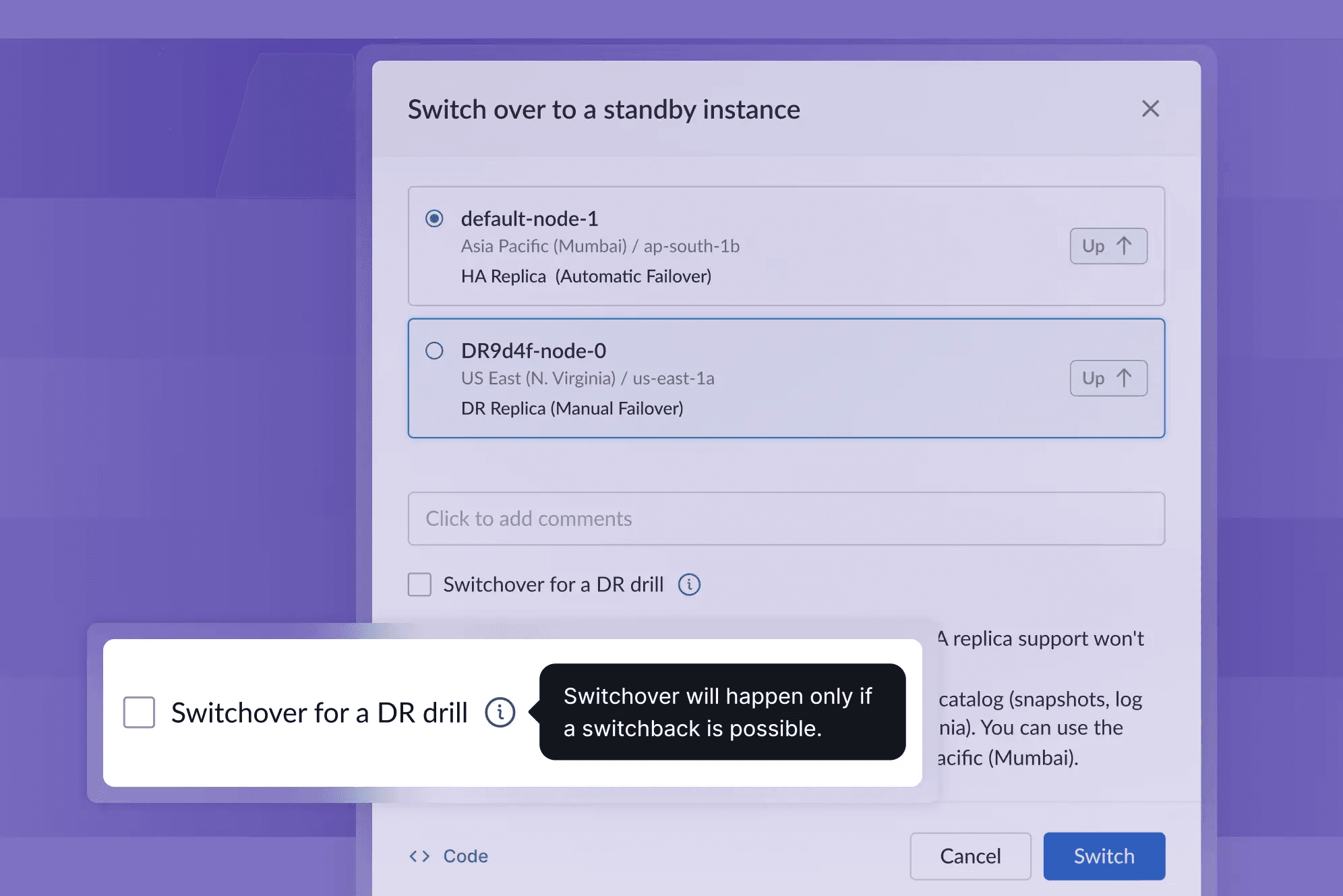
Disaster recovery you can test. Without risking production.
A DR drill and a real failover are different operations on Tessell, and the platform keeps them apart. A drill runs a graceful switchover: every transaction is committed, the primary is demoted cleanly, and the DR instance is promoted only once full data consistency is confirmed. If it cannot be done safely, the drill stops rather than risk inconsistency. A real disaster runs a forceful promotion, after which Tessell automatically rebuilds the original primary so you can switch back once replication is re-established. Either way, switchback is available. That separation is what lets teams run DR drills as a routine operation, on a schedule, instead of treating recovery as a plan nobody has tested.
Quarterly cross-region DR drills with seamless switchback and a validated 15-minute RPO, documented for regulators, across a five-node production cluster (primary, standby, and three cross-region DR nodes).
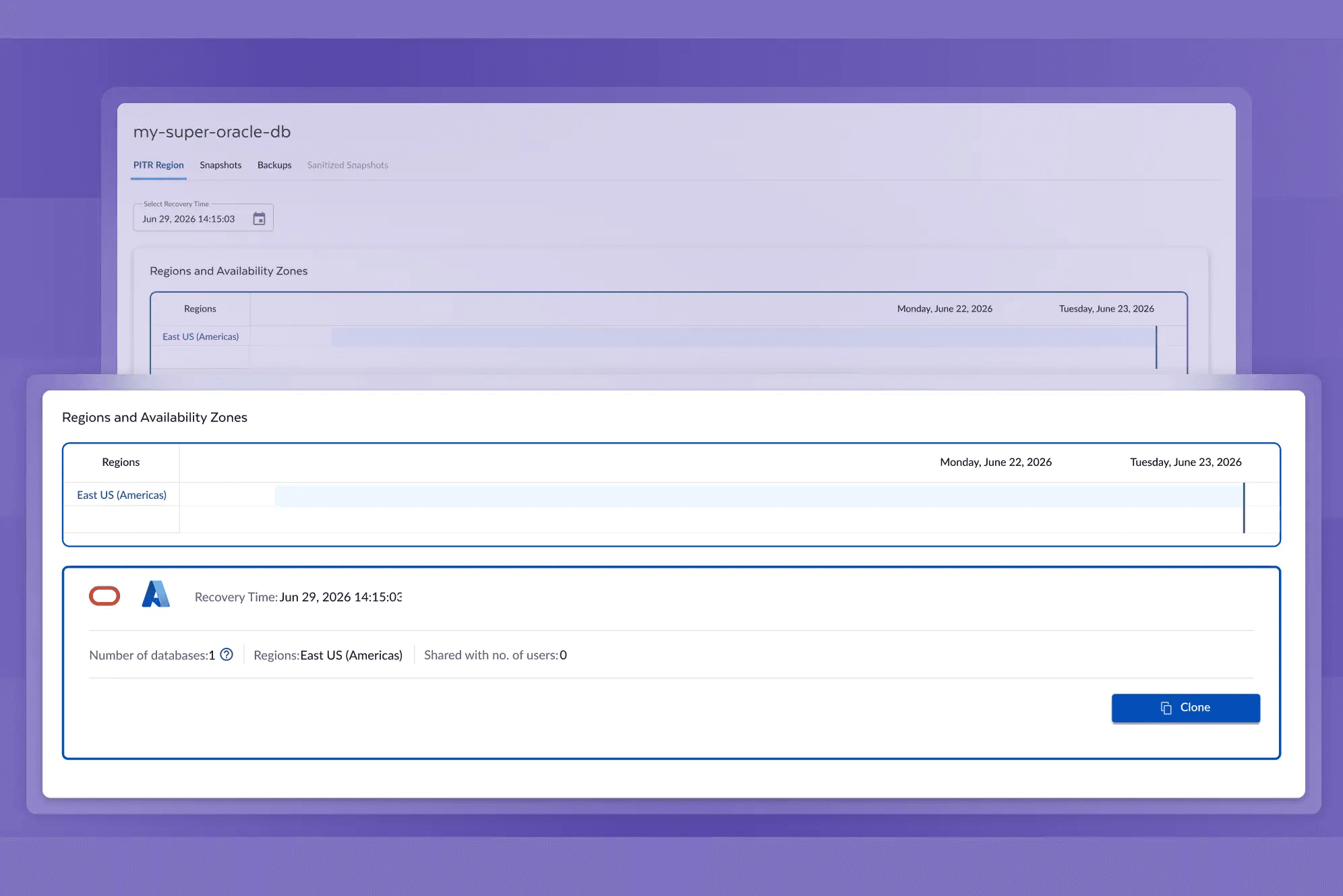
RPO and RTO that hold up to an auditor.
Recovery objectives are only as good as your ability to prove them. Tessell captures transaction logs every 5 minutes for point-in-time recovery, and with synchronous replication on Oracle, an RPO of zero and an RTO measured in seconds are achievable for the most critical workloads. Because drills are run and recorded on a schedule, the numbers in your business-continuity plan are tested numbers, not targets. That documentation is the same evidence your Security and Compliance reviews depend on.
RPO 0 and RTO of 30 seconds for critical Oracle workloads, across a 33 data center migration.
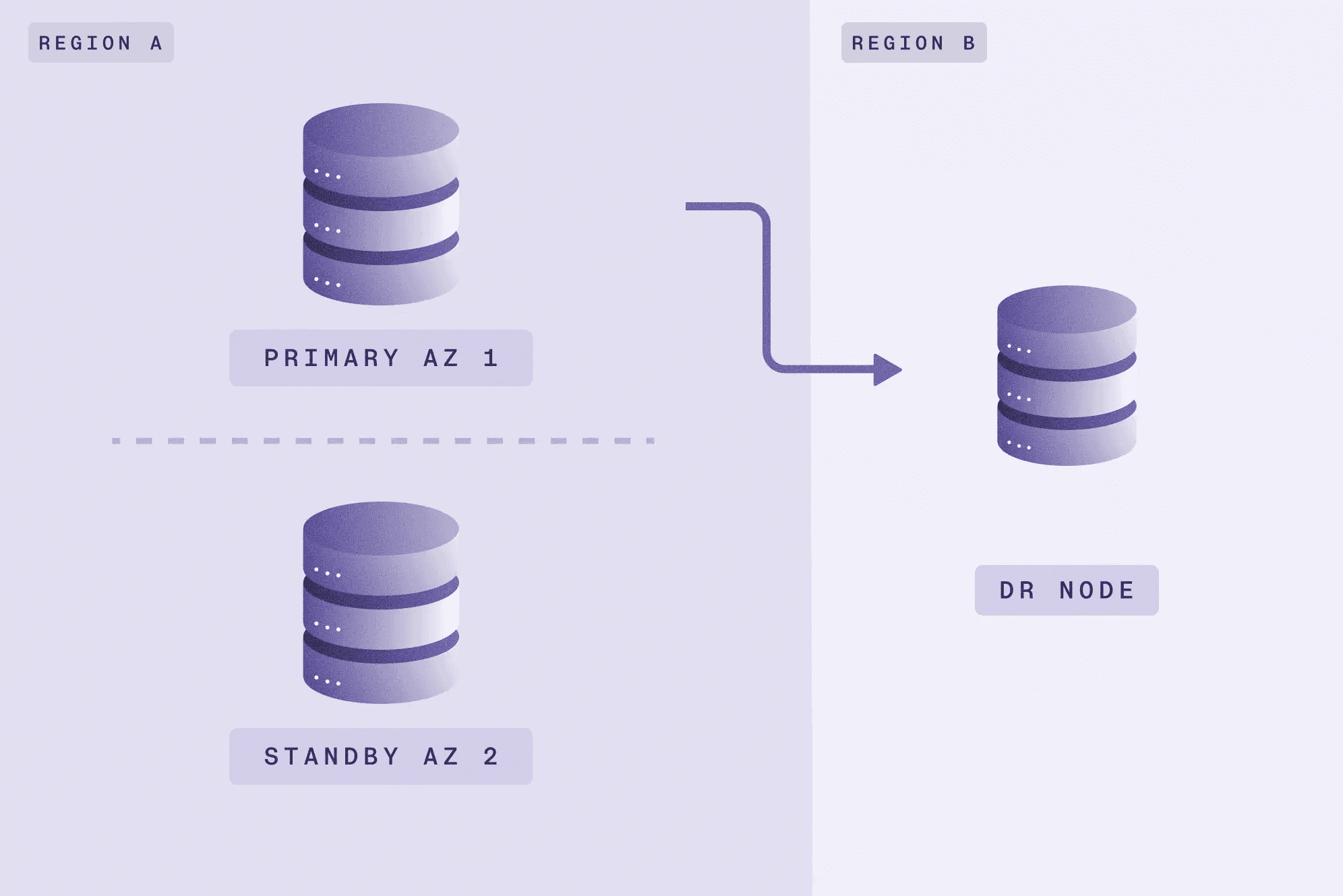
High availability built in. Failover automated.
Switch on Multi-AZ HA at provisioning and Tessell places a standby in a separate availability zone, kept in sync with the primary. When the platform detects a primary failure, planned or unplanned, it fails over to the standby automatically, typically in 60 to 120 seconds. Each engine uses its native replication, so resilience matches the way the database is built to run. In Azure regions without availability zones, Tessell uses Availability Sets to keep the primary and standby on separate fault domains
RTO reduced from 8 hours to automatic failover, and RPO from 3 hours to zero.
Business continuity is one part of the database lifecycle.
A database has to be provisioned, kept current, watched, and kept running when something goes wrong. Tessell manages the full operational lifecycle from one platform.
Every database, provisioned to the same standard, in minutes.
Multi-AZ HA is a toggle here, at provisioning time.
Explore ProvisioningKeep every database current
The same switchover machinery that powers failover also keeps patching from meaning downtime.
Explore Lifecycle ManagementKnow what every database is doing.
Watch replica health and replication state alongside primary metrics.
Explore MonitoringSee what provable recovery looks like for your estate.
Walk through Multi-AZ HA, the DR drill and failover flows, and the documentation a drill produces with a Tessell engineer, using your engines, your cloud, and your recovery requirements.