









Know exactly what every database costs. Across every cloud, every engine, every team
Tessell gives you a per-database cost breakdown - compute, storage, licensing, backup - attributed, live, and unified across your entire estate. So the decisions that drive cost are visible before they compound, not after they land on a bill.
Trusted by
Leading Healthcare Data Platform
67.5 TB migrated, zero compliance gaps
Fortune 100 Energy Company
700+ databases, 4 regions, unified governance
Fortune 500 Insurance Company
85% operations automated
Database cost is rarely a spending problem. It is a visibility problem
Multi-cloud, distributed teams, managed services - these are the right architectural choices. They also create a cost visibility gap that no individual cloud or service was designed to close.
Spend is visible. What drives it isn't
Cloud billing surfaces totals by service, not by database, team, or decision. Without that attribution, cost optimization defaults to optimizing broadly rather than acting precisely. Most enterprises manage their largest infrastructure cost without a complete picture of what's behind it.
Licensing is where the biggest costs hide
Enterprise database licensing is the largest and least transparent line item in most database estates. Overprovisioning is common and rarely quantified because visibility simply isn't there without a dedicated audit engagement.
Multi-cloud multiplies the problem
Each cloud runs its own billing model, its own utilization metrics, its own cost cadence. Reconciling that billing data into a single picture is a manual exercise - and the further it falls behind, the harder it is to act on.Four dimensions of database cost that cloud billing alone cannot surface
Tessell tracks cost continuously at the database level - attributed, live, and unified across every cloud and engine you run. Here is what that visibility actually gives you.
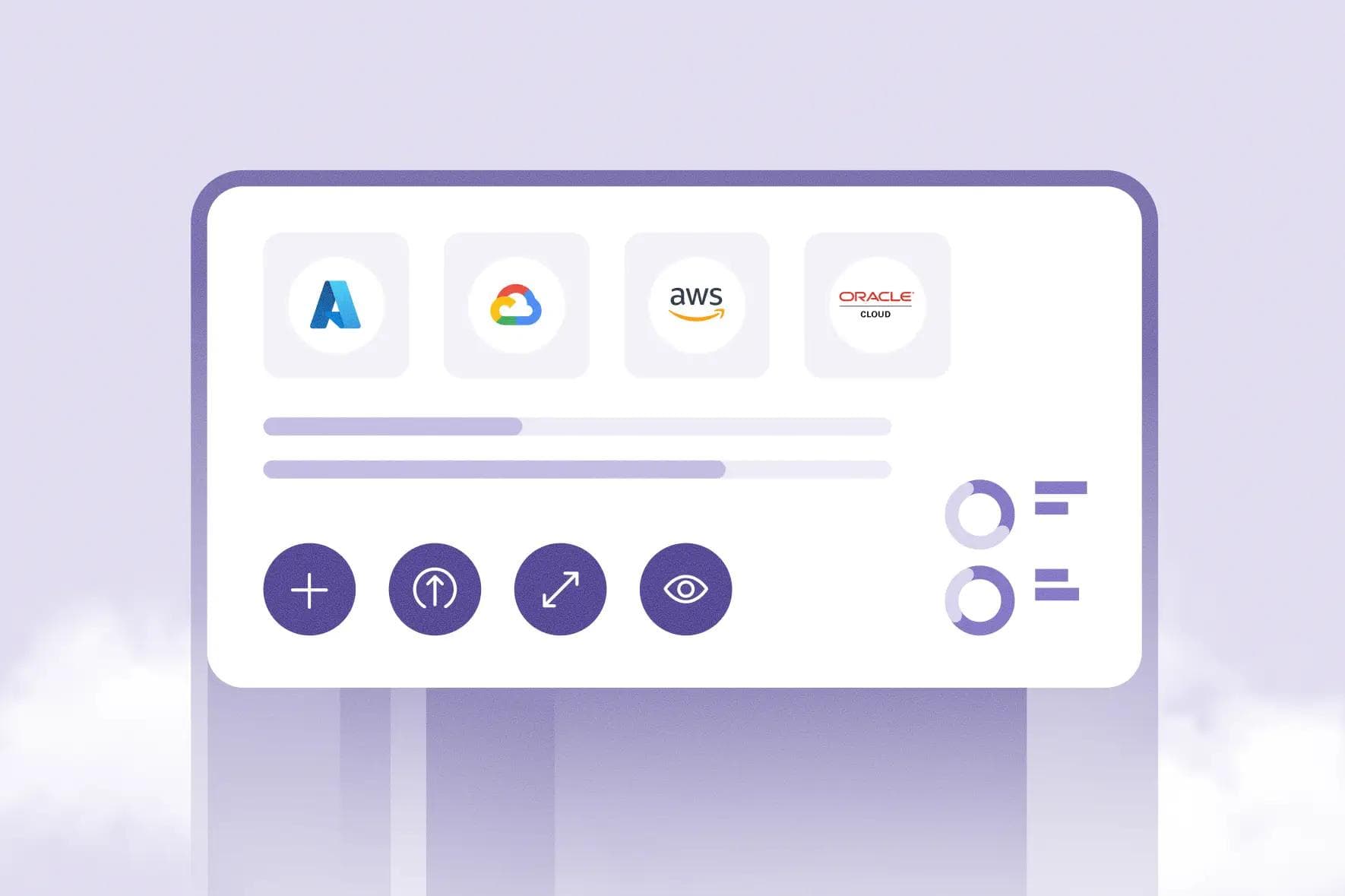
Know what each database is costing, not just what the bill says
Cloud billing summarizes spend by service. Tessell breaks it down by individual databases across compute, storage, licensing, and backup, attributed by team, subscription, and environment. The result is a cost picture precise enough to make consolidation decisions with confidence.
€1.45M annualized savings across 700+ databases in four Azure regions, from license optimization, compute consolidation, and scheduling efficiency.

See where your estate is overprovisioned, before it shows up on a bill
Most overprovisioning goes undetected not because teams aren't looking, but because the signal arrives too late. Tessell tracks live utilization across compute and storage continuously, surfacing idle instances, oversized shapes, and consolidation opportunities in time to act on them, not after the cost has compounded.
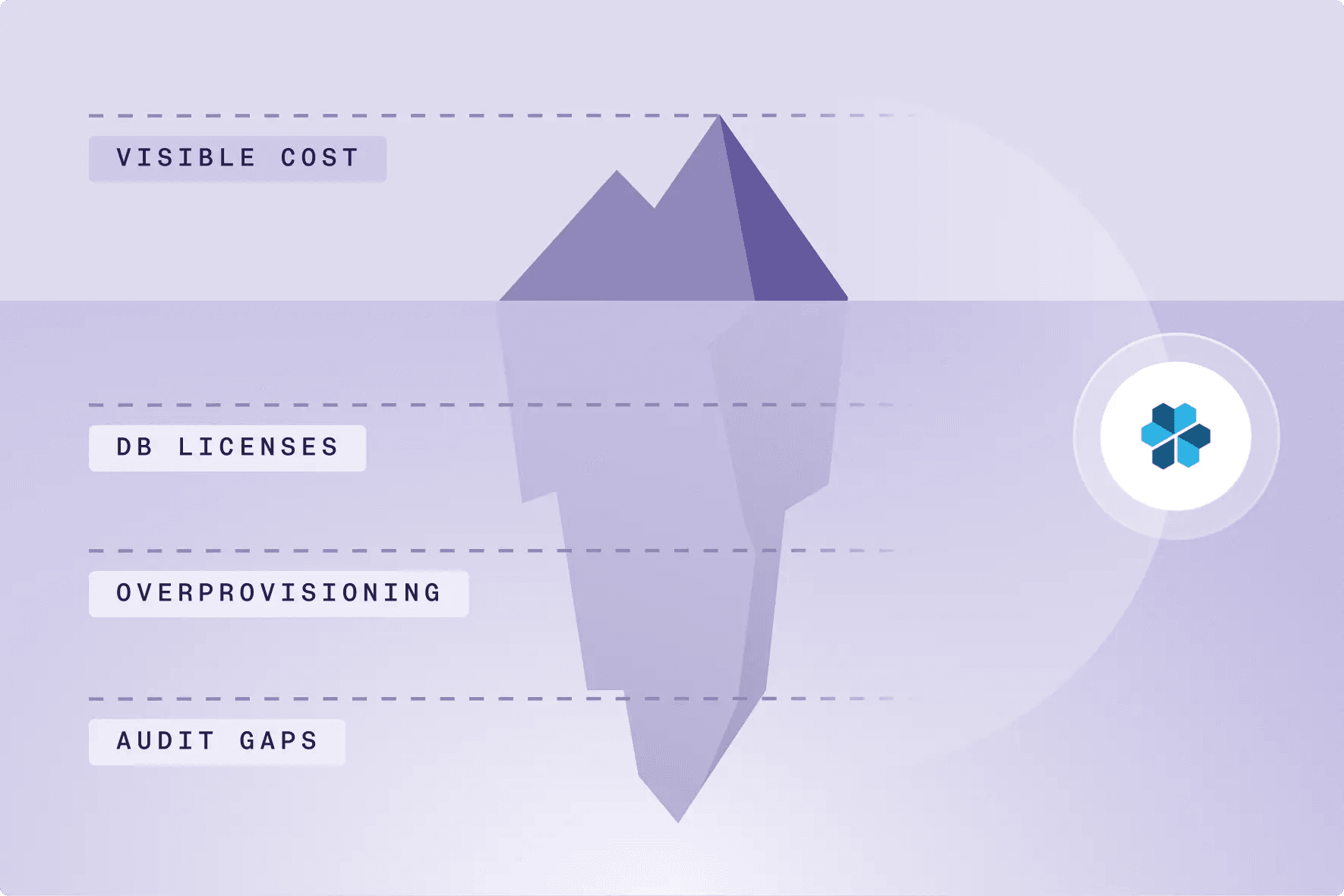
Govern your license position without a manual audit
Enterprise database licensing is the most complex cost to track in most database estates. Tessell continuously tracks what editions and versions are deployed, where, and whether they're appropriately sized, so overprovisioning surfaces before it goes unaddressed, with no manual audit required
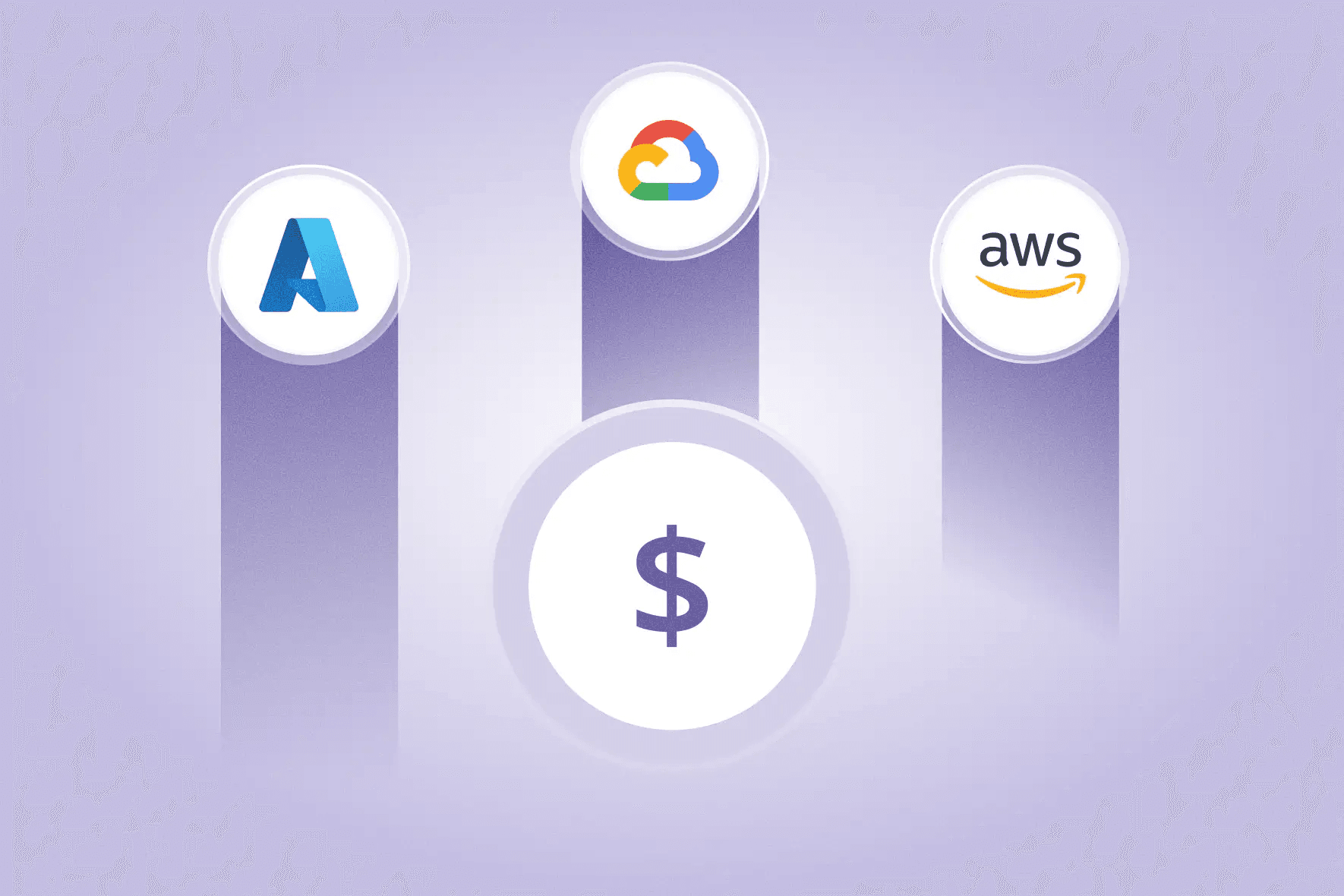
One cost picture across every cloud you run
When your database estate spans more than one cloud, cost visibility fragments naturally. Each cloud runs its own billing model and its own utilization metrics. Tessell normalizes cost data across AWS, Azure, and GCP into a single view - so your team is analyzing one picture, not reconciling three. Tessell spend also draws against existing cloud marketplace commits, so the platform cost sits inside budgets already allocated.
The business case that got you here should be the same one you track in production.
Most infrastructure investments are justified with modeled projections and tracked with something entirely different. Tessell closes that gap from assessment to deployment to board reporting.Before Deployment
A model built from your actual environment. The Business Value Assessment maps your current database estate and models where costs are concentrated, where overprovisioning exists, and what consolidation would realistically save. Every figure comes from your infrastructure data, not from industry benchmarks.After Deployment
The same metrics, now live. Once Tessell is running, Cost Visibility surfaces the same attribution model in real time. The cost breakdown that was modeled pre-deployment is now drawn from live operational data. The metrics your team used to justify the investment are the same ones used to track it.The Result
A business case that stays defensible. When a CFO or board asks whether the investment delivered, the answer is not a retrospective analysis assembled from multiple systems. It is a live report drawn from the platform itself, using the same methodology as the original model.Cost visibility across 700+ databases, four regions, one control plane.
A global Fortune 100 energy company, manages one of the largest database estates on Tessell. The cost picture Tessell surfaces breaks down not just by total, but by source.
"Special legacy requirements were met, and performance was on par or better than existing solution."
Cost visibility is most powerful when the estate behind it is governed and protected.
Knowing what your estate costs is the foundation. What makes that visibility actionable is knowing that every database in the picture is operating to the same standard - and that the data inside it never leaves your perimeter.
The estate you are optimizing should be governed by the same standards everywhere
The Business Value Assessment maps your current database estate and models where costs are concentrated, where overprovisioning exists, and what consolidation would realistically save. Every figure comes from your infrastructure data, not from industry benchmarks.
See Policy EnforcementCost optimization should never come at the expense of data sovereignty.
Tessell's architecture keeps your data within your own cloud account, under your own keys, on your own network - so visibility and optimization decisions never trade off against compliance or control.
See Security and Compliance
Get startedSee what your database estate is actually costing you.
Start with a Business Value Assessment to understand where costs are concentrated in your estate. Or speak directly with a Tessell engineer if you have specific questions about how Cost Visibility works in your environment.