
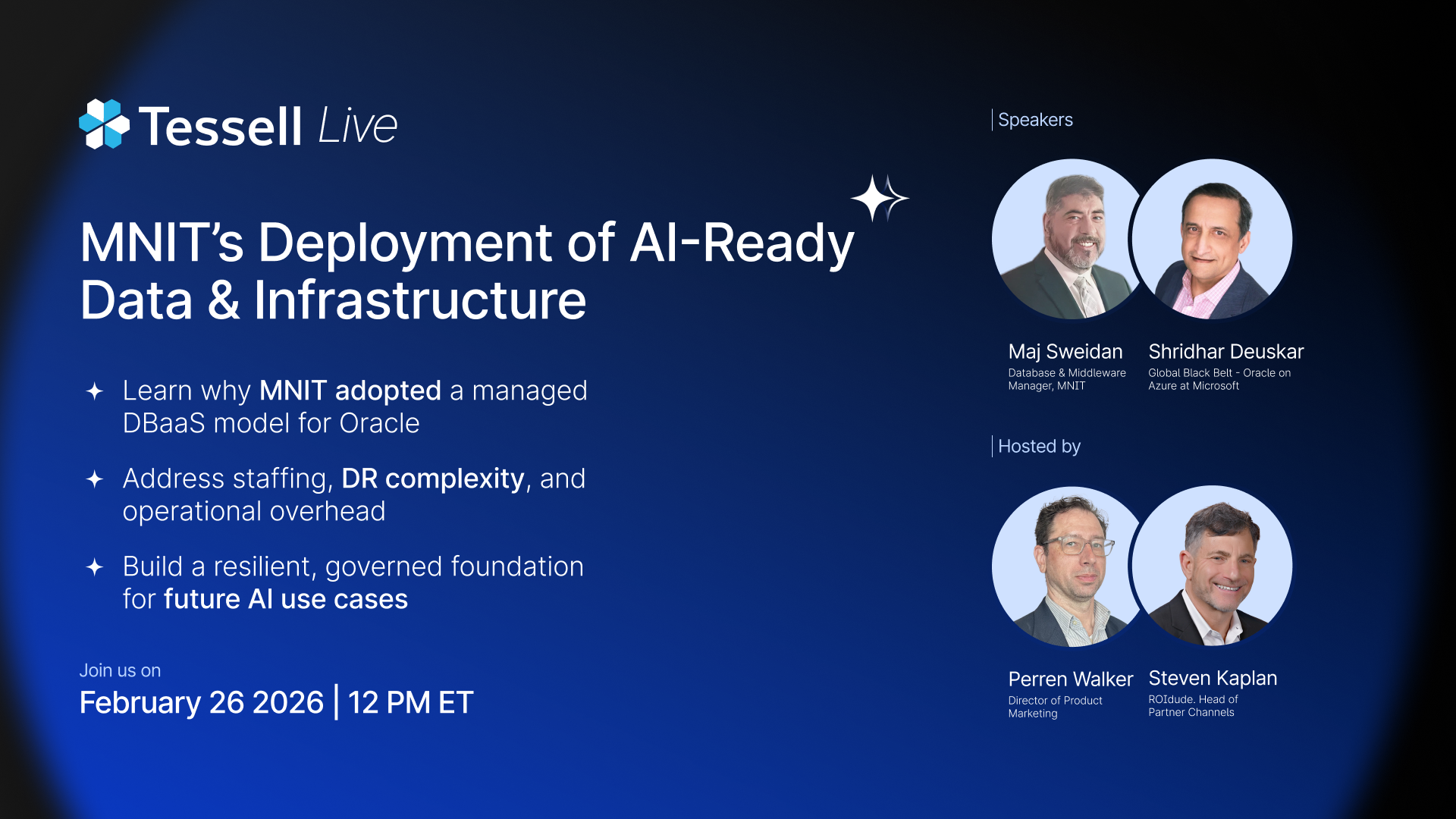
MNIT’s Deployment of AI-Ready Data & Infrastructure (Part 1) - Modernizing Mission-Critical Oracle Systems for the Future
Modernizing legacy Oracle environments is no longer just an infrastructure initiative. It is a strategic decision that impacts resilience, governance, cost transparency, total cost of ownership, and long-term data readiness.


In part I of this two-part series, leaders from MNIT, Microsoft, and Tessell discuss the thinking behind MNIT’s transition to a managed DBaaS model on Azure—and what it takes to modernize mission-critical systems without disrupting operations, while improving cost predictability and long-term sustainability.
This session will explore:
- Why MNIT selected a managed DBaaS approach for Oracle
- The operational realities they needed to solve: staffing constraints, disaster recovery complexity, and time-to-service
- How mission-critical systems raise the bar for reliability, security, and cost predictability
- The financial dimension: shifting from CapEx-heavy legacy models to an OpEx-aligned, FinOps-aware operating model.
- Governance and compliance considerations from the accountable owner’s perspective
- How building a modern, well-governed data platform today enables future AI initiatives - without premature AI adoption
- What went smoother than expected, and lessons that can help others avoid common pitfalls
This will be a practical discussion grounded in real-world decision-making—not a product pitch.
Part II will dive deeper into architecture choices, HA/DR design, and operational best practices.
Who should attend?
- CIOs, CTOs, and IT Leaders
- Infrastructure and Platform Engineering Teams
- Oracle DBAs and Database Architects
- Cloud Strategy and FinOps Leaders
- Governance, Risk, and Compliance Stakeholders
- Teams responsible for modernizing mission-critical data platforms
What to Expect?
This session is designed for leaders and practitioners responsible for modernization decisions.
You can expect:
- A candid, experience-led discussion of why the transition was made
- Insight into how operational constraints shaped the modernization path
- Lessons learned from managing risk in mission-critical environments
- Perspectives on aligning infrastructure modernization with financial governance
- Clear takeaways for evaluating managed DBaaS models in complex environments
The format will be conversational but structured - focused on decisions, trade-offs, and outcomes that others can apply.